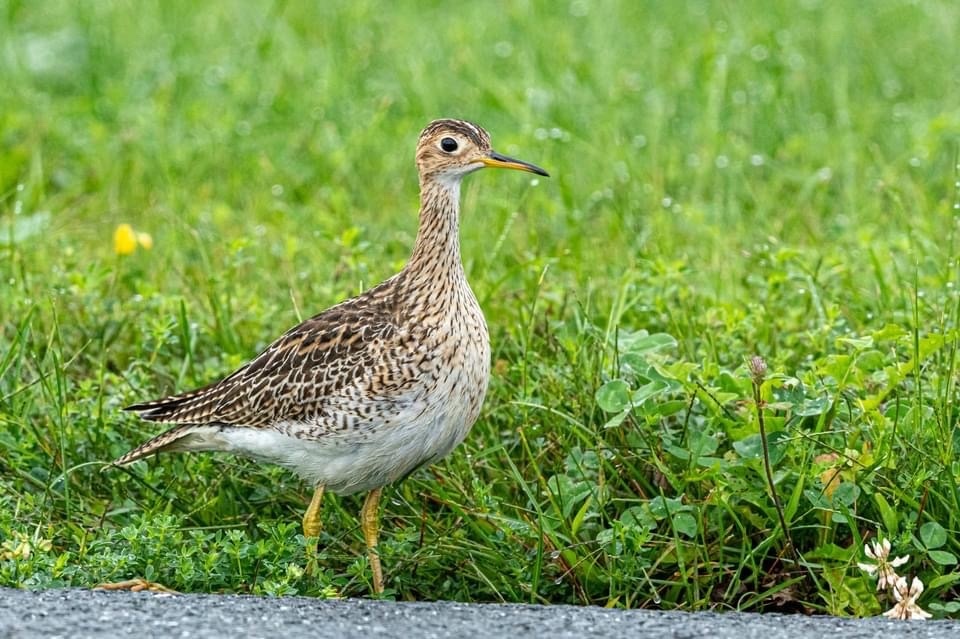
Upland Sandpiper
Bartramia longicauda
Also known as: Upland Plover
Habitat
Ground
Diet
Invertebrate
Active Time
Diurnal
Size
159 g
About This Species
A grassland specialist of the North American prairies, often seen standing upright on fence posts or in open pasture with its long neck and small head giving it a distinctive silhouette. Its rolling, whistled 'wolf-whistle' call carries a long way across open ground and is often the easiest way to detect it before you see the bird. Late spring through summer, on native or lightly grazed grassland, is the best window to find it on breeding territory.
Ethical Viewing Guidelines
- Stay on trails or field edges rather than walking through open grassland during the breeding season, since nests are on the ground and very easy to trample without noticing.
- Migratory bird protections apply across much of its US and Canadian range, but enforcement and specific setback distances vary, so the safest approach is to view from a vehicle or a fixed distance rather than entering nesting fields.
- Because populations have declined with grassland loss, minimising any additional disturbance during nesting is especially worthwhile.
LCAvesCharadriiformesScolopacidae
Seasonal Activity
189,571 sightings · 2000–2026
Citizen science records via GBIF
All monthsThis month
Classification
- Kingdom
- Animalia
- Phylum
- Chordata
- Class
- Aves
- Order
- Charadriiformes
- Family
- Scolopacidae
Traits
- Diet
- Invertebrate
- Foraging
- Ground
- Activity
- Diurnal
- Body mass
- 159 g
Photo
(c) Coleen Lawlor, some rights reserved (CC BY-NC), uploaded by Coleen Lawlor
CC-BY-NC-4.0
Occurrence data from GBIF.