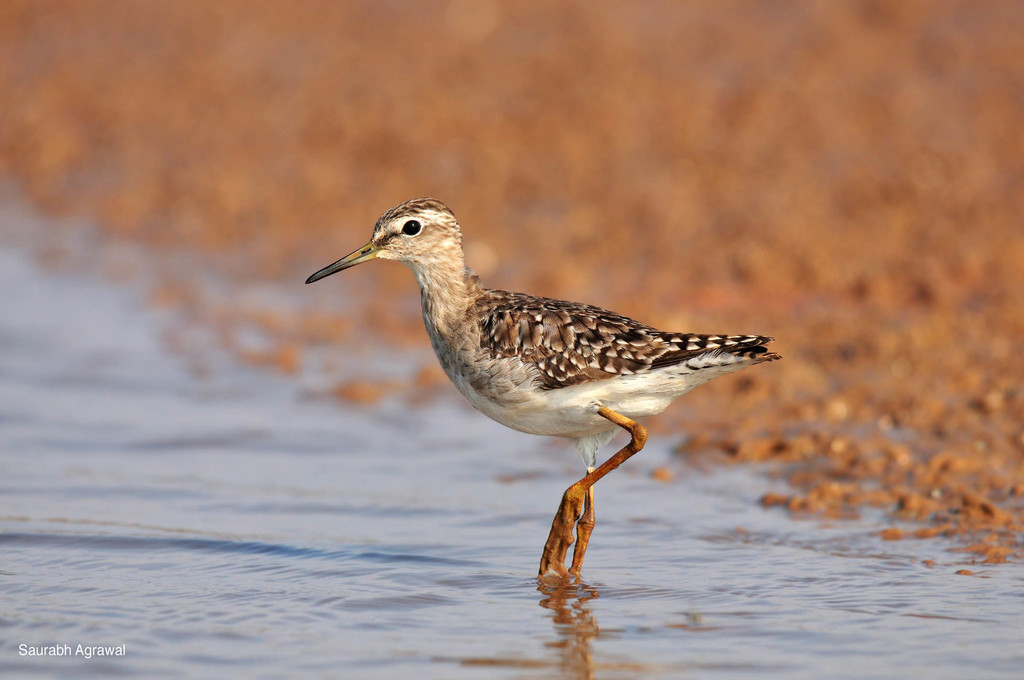
Wood Sandpiper
Tringa glareola
Habitat
Aquatic
Diet
Invertebrate
Active Time
Diurnal
Size
62 g
About This Species
A slim, elegant wading bird with a pale eyebrow stripe and neat spotted upperparts, found feeding along the muddy edges of pools, flooded fields and marshes, often in small loose groups. It forages actively during the day, picking and probing for invertebrates in shallow water, and passage periods in spring and autumn are the best times to see it at wetland stopover sites away from the breeding range. On breeding grounds further north it favours boggy, open wetland with scattered trees.
Ethical Viewing Guidelines
- Keep to paths and hides around wetland edges rather than walking onto exposed mud or into marsh vegetation where birds are feeding or roosting, since flushed flocks lose valuable feeding time during migration.
- Migratory wetland birds are protected under wildlife and, in many places, wetland habitat regulations that vary by country, so check local rules for sensitive sites.
- Approaching slowly and staying low near the water's edge allows closer views without causing birds to fly.
LCAvesCharadriiformesScolopacidae
Seasonal Activity
1,409,400 sightings · 2000–2026
Citizen science records via GBIF
All monthsThis month
Classification
- Kingdom
- Animalia
- Phylum
- Chordata
- Class
- Aves
- Order
- Charadriiformes
- Family
- Scolopacidae
Traits
- Diet
- Invertebrate
- Foraging
- Aquatic
- Activity
- Diurnal
- Body mass
- 62 g
Photo
(c) Saurabh Agrawal, some rights reserved (CC BY-NC), uploaded by Saurabh Agrawal
CC-BY-NC-4.0
Occurrence data from GBIF.