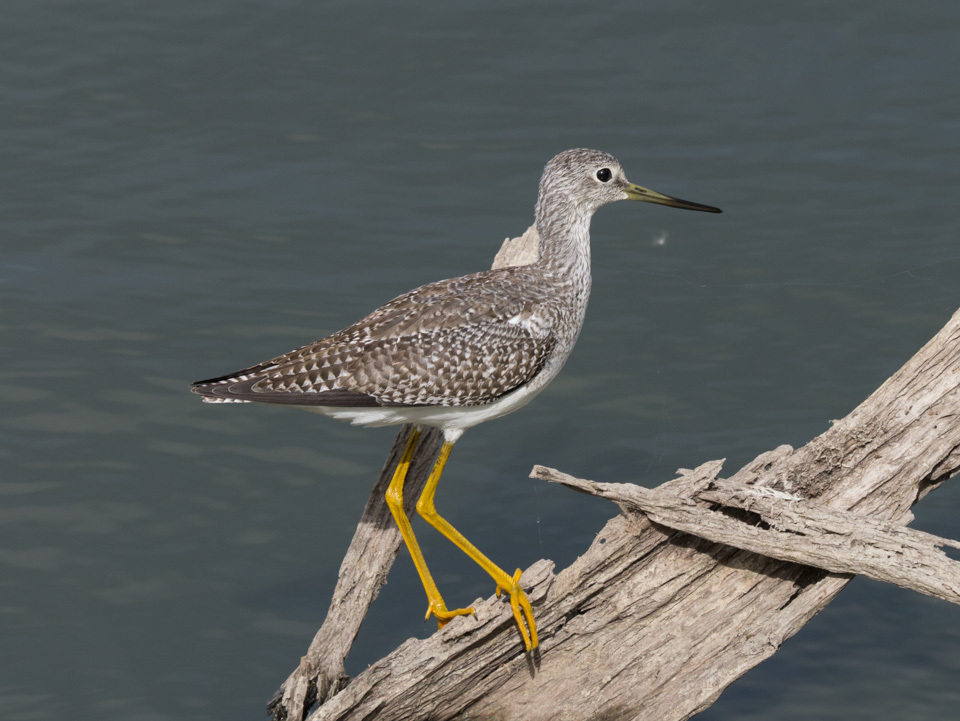
Greater Yellowlegs
Tringa melanoleuca
Also known as: Greater Yellow-Legs
Habitat
Aquatic
Diet
Invertebrate
Active Time
Diurnal
Size
162 g
About This Species
A tall, active shorebird found wading in shallow water of mudflats, marshes and flooded fields, often seen bobbing its head and dashing after small fish and invertebrates. Its loud, ringing three-note call is frequently the first clue to its presence, carrying well across open wetlands. Migration periods bring the best numbers, when birds gather at productive mudflats and pond edges to feed.
Ethical Viewing Guidelines
- As a Near Threatened species, extra care is warranted; keep a respectful distance and avoid flushing feeding or roosting birds, since repeated disturbance during migration stopovers can cost them critical feeding time.
- Shorebirds and wetland habitats carry legal protections in many countries along its migratory range, though the details differ between nations, so check local regulations before visiting a site.
- Viewing from a hide, vehicle, or established trail rather than walking out onto mudflats is the safer approach for both the bird and sensitive wetland substrate.
NTAvesCharadriiformesScolopacidae
Seasonal Activity
3,132,222 sightings · 2000–2026
Citizen science records via GBIF
All monthsThis month
Classification
- Kingdom
- Animalia
- Phylum
- Chordata
- Class
- Aves
- Order
- Charadriiformes
- Family
- Scolopacidae
Traits
- Diet
- Invertebrate
- Foraging
- Aquatic
- Activity
- Diurnal
- Body mass
- 162 g
Photo
(c) Lee Jaffe, some rights reserved (CC BY-NC-SA)
CC-BY-NC-SA-4.0
Occurrence data from GBIF.