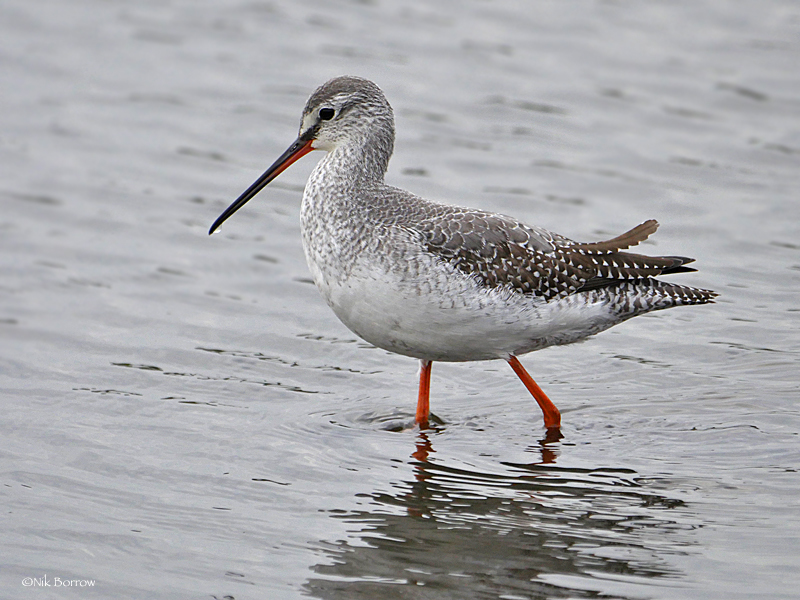
Spotted Redshank
Tringa erythropus
Habitat
Aquatic
Diet
Invertebrate
Active Time
Diurnal
Size
158 g
About This Species
A slender, long-legged wader that breeds on Arctic tundra and winters across coastal wetlands, estuaries and flooded fields in Europe, Africa and Asia, often wading belly-deep while sweeping its bill side to side for food. Breeding adults are strikingly sooty black, while winter and passage birds are pale grey above and white below, best distinguished by the needle-fine bill and bright red legs. Estuaries and managed wetlands in autumn and winter offer the most reliable views, often among mixed flocks of other waders.
Ethical Viewing Guidelines
- Keep to paths, hides or the far side of open water rather than walking out onto mudflats or roosting areas, since flushing feeding or roosting waders forces them to burn energy they need for migration and winter survival.
- Wetland birds are protected under wildlife law in most of its wintering and breeding range, though the specific rules and enforcement vary by country.
- Approaching slowly, staying low, and avoiding dogs off leash near feeding flocks all help minimise disturbance.
LCAvesCharadriiformesScolopacidae
Seasonal Activity
569,917 sightings · 2000–2026
Citizen science records via GBIF
All monthsThis month
Classification
- Kingdom
- Animalia
- Phylum
- Chordata
- Class
- Aves
- Order
- Charadriiformes
- Family
- Scolopacidae
Traits
- Diet
- Invertebrate
- Foraging
- Aquatic
- Activity
- Diurnal
- Body mass
- 158 g
Photo
(c) Nik Borrow, some rights reserved (CC BY-NC)
CC-BY-NC-4.0
Occurrence data from GBIF.