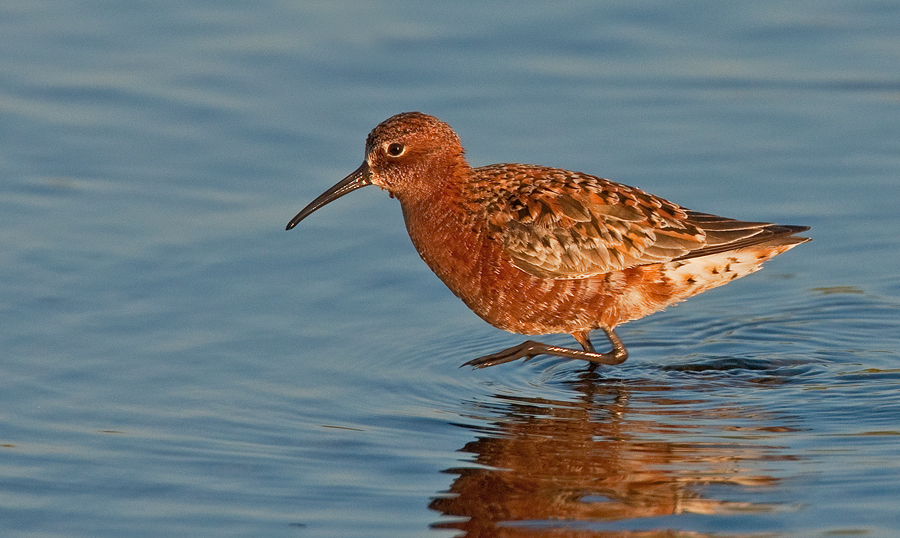
Curlew Sandpiper
Calidris ferruginea
Also known as: Curlew Sanspiper
Habitat
Aquatic
Diet
Invertebrate
Active Time
Diurnal
Size
58 g
About This Species
Watch for a slim wader with a long, evenly downcurved bill probing rhythmically through soft mud or shallow water, often alongside other small sandpipers on estuaries and coastal mudflats. It is a long-distance migrant, so the best chances come during spring and autumn passage when flocks stop to refuel, with adults in brick-red breeding plumage most striking in late spring. Scan exposed mud at low tide, since birds spread out to feed as the water recedes and concentrate again as the tide turns.
Ethical Viewing Guidelines
- This species is globally threatened, so keep well back and use binoculars or a scope rather than closing the distance, especially at high-tide roosts where flushed birds burn fat reserves they cannot easily replace mid-migration.
- Legal protection for migratory shorebirds varies considerably across its Siberian breeding grounds and its African, Asian and Australian wintering and stopover sites, so do not assume one country's rules apply elsewhere along the route.
- Where you are uncertain of a specific distance or statute, the safer default is to stay far enough back that the flock's feeding and roosting behaviour is undisturbed.
Seasonal Activity
503,903 sightings · 2000–2026
Citizen science records via GBIF
Classification
- Kingdom
- Animalia
- Phylum
- Chordata
- Class
- Aves
- Order
- Charadriiformes
- Family
- Scolopacidae
Traits
- Diet
- Invertebrate
- Foraging
- Aquatic
- Activity
- Diurnal
- Body mass
- 58 g
Photo
(c) Paul Cools, some rights reserved (CC BY-NC), uploaded by Paul Cools
CC-BY-NC-4.0
Occurrence data from GBIF.