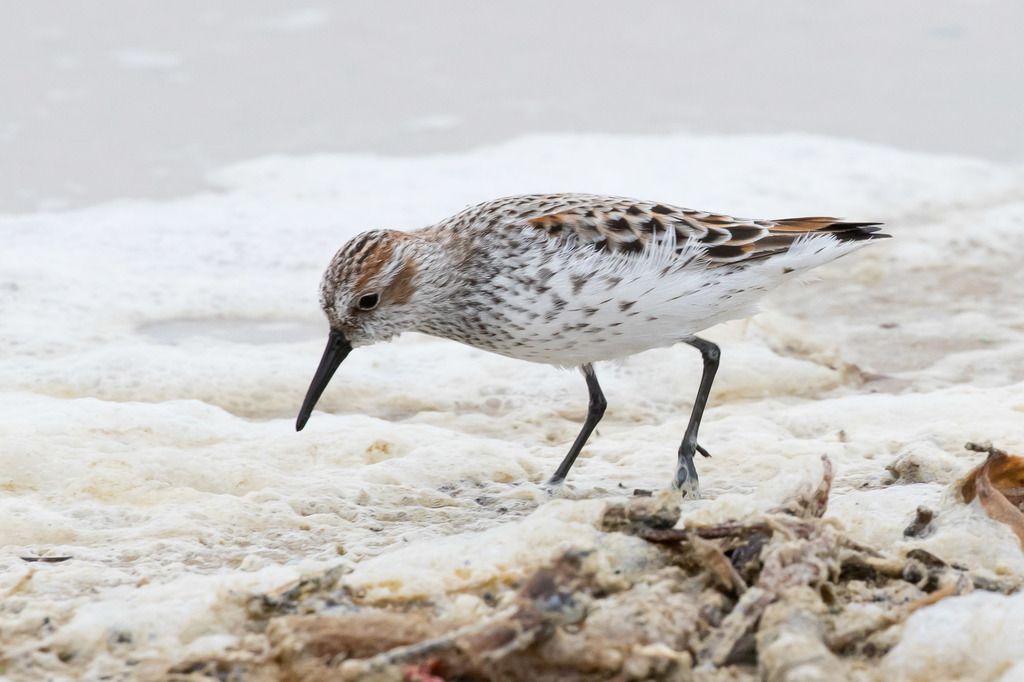
Western Sandpiper
Calidris mauri
Also known as: Pond Bird
Habitat
Aquatic
Diet
Invertebrate
Active Time
Diurnal
Size
28 g
About This Species
This small shorebird probes soft mud and sand at the water's edge with a fine, slightly drooping bill, often in mixed flocks with other sandpipers on tidal mudflats, estuaries and lake shores. It is most reliably seen during spring and fall migration and in winter along coastlines, feeding actively as the tide recedes; a scope helps pick it out among similar peeps by its slightly longer bill and more crouched feeding posture.
Ethical Viewing Guidelines
- Stay back at least 30 to 50 metres and avoid walking directly at feeding or roosting flocks, since flushing shorebirds repeatedly during migration or winter forces them to burn critical energy reserves.
- Many stopover sites are protected wetlands or reserves with posted access rules that should be followed, and in several countries disturbing roosting shorebird flocks can breach wildlife protection law.
- Move slowly, keep dogs leashed, and give flocks a wide, quiet berth rather than pushing through them.
LCAvesCharadriiformesScolopacidae
Seasonal Activity
856,625 sightings · 2000–2026
Citizen science records via GBIF
All monthsThis month
Classification
- Kingdom
- Animalia
- Phylum
- Chordata
- Class
- Aves
- Order
- Charadriiformes
- Family
- Scolopacidae
Traits
- Diet
- Invertebrate
- Foraging
- Aquatic
- Activity
- Diurnal
- Body mass
- 28 g
Photo
(c) Greg Lasley, some rights reserved (CC BY-NC), uploaded by Greg Lasley
CC-BY-NC-4.0
Occurrence data from GBIF.