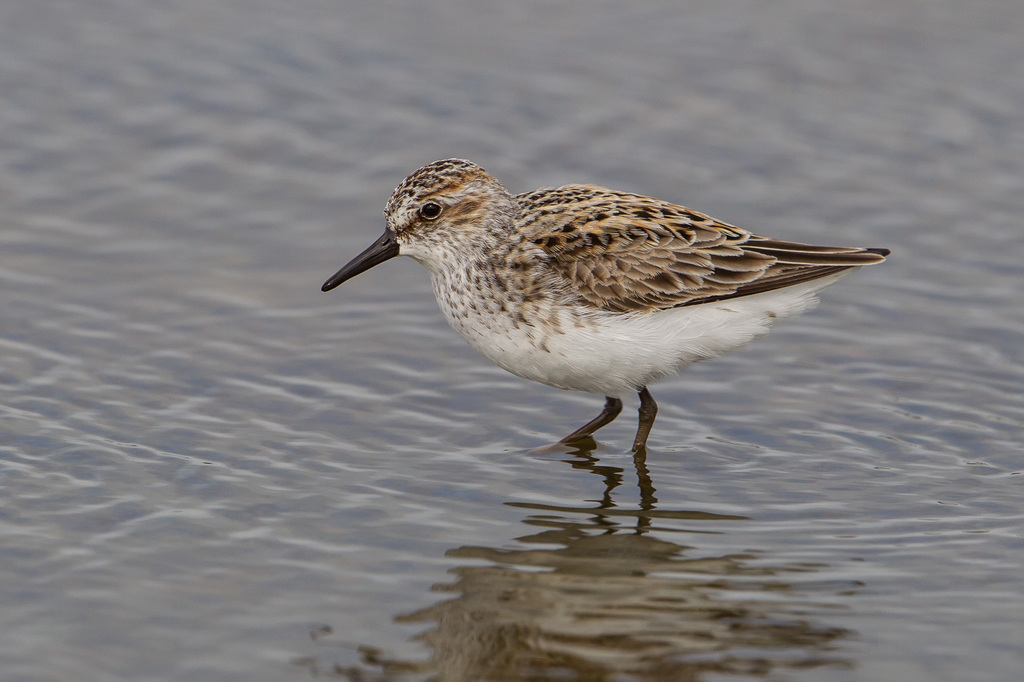
Semipalmated Sandpiper
Calidris pusilla
Also known as: Semi-Palmated Sandpiper, Pond Bird
Habitat
Ground
Diet
Invertebrate
Active Time
Diurnal
Size
28 g
About This Species
This small, plain sandpiper forages busily along tidal mudflats and shorelines, probing and pecking rapidly at the surface for invertebrates, often in mixed flocks with other small shorebirds during migration. It breeds on Arctic tundra and is best looked for on coastal mudflats and beaches during spring and, especially, autumn migration, when large numbers pass through staging areas. Falling tides that expose fresh mud tend to concentrate feeding birds and make viewing easiest.
Ethical Viewing Guidelines
- Because this species is listed as Near Threatened, extra care around feeding and roosting flocks matters; stay at least fifty metres back and avoid walking directly at a flock, which forces birds into repeated, energy-costly flights during migration.
- Shorebirds and their stopover habitat receive legal protection in many countries along the flyway, including the United States and Canada, though the strength of protection and enforcement varies by jurisdiction.
- Approach mudflats slowly from the side rather than head-on, and use a scope or long lens instead of closing the distance.
Seasonal Activity
1,118,614 sightings · 2000–2026
Citizen science records via GBIF
Classification
- Kingdom
- Animalia
- Phylum
- Chordata
- Class
- Aves
- Order
- Charadriiformes
- Family
- Scolopacidae
Traits
- Diet
- Invertebrate
- Foraging
- Ground
- Activity
- Diurnal
- Body mass
- 28 g
Photo
(c) Greg Lasley, some rights reserved (CC BY-NC), uploaded by Greg Lasley
CC-BY-NC-4.0
Occurrence data from GBIF.