Species of Concern
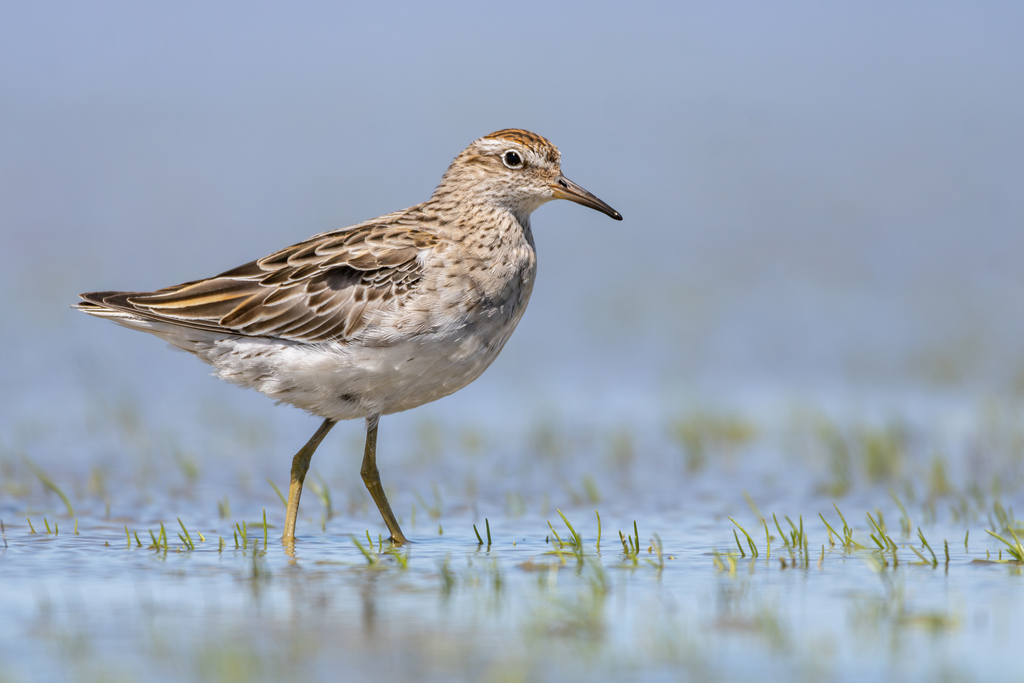
Sharp-Tailed Sandpiper
Calidris acuminata
Habitat
Ground
Diet
Invertebrate
Active Time
Diurnal
Size
66 g
About This Species
Breeds on Siberian tundra and undertakes a long migration through East Asia to wintering grounds in Australasia, most often seen on migration in small flocks probing muddy edges of wetlands, wet grassland and coastal mudflats. A buff wash across the breast and a distinctly peaked crown help separate it from similar sandpipers at close range. Coastal and inland wetland stopover sites during spring and autumn passage give the best opportunity to see it.
Ethical Viewing Guidelines
- This species is classified as Vulnerable, largely due to the loss of intertidal stopover habitat along its migration route, so disturbance at any site where it is feeding or roosting adds real pressure to an already declining population.
- Keep well back using a scope rather than approaching on foot, stay off exposed mudflats and roosting areas, and follow all posted access restrictions at coastal wetland reserves, which in several countries carry legal protection for migratory shorebirds.
VUAvesCharadriiformesScolopacidae
Seasonal Activity
152,766 sightings · 2000–2026
Citizen science records via GBIF
All monthsThis month
Classification
- Kingdom
- Animalia
- Phylum
- Chordata
- Class
- Aves
- Order
- Charadriiformes
- Family
- Scolopacidae
Traits
- Diet
- Invertebrate
- Foraging
- Ground
- Activity
- Diurnal
- Body mass
- 66 g
Photo
(c) Samuel Amaris, some rights reserved (CC BY-NC), uploaded by Samuel Amaris
CC-BY-NC-4.0
Occurrence data from GBIF.