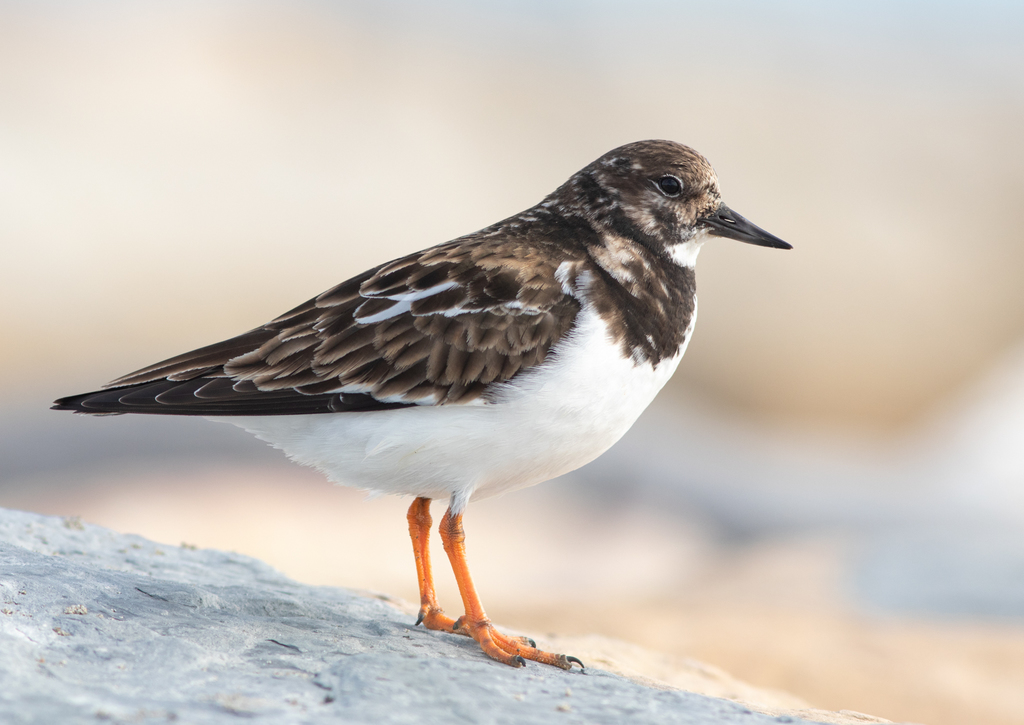
Ruddy Turnstone
Arenaria interpres
Also known as: Turnstone, Pond Bird
Habitat
Ground
Diet
Invertebrate
Active Time
Diurnal
Size
136 g
About This Species
Watch rocky shorelines, jetties and seaweed-covered beaches for a stocky, orange-legged shorebird flipping stones and debris with its bill in search of invertebrates underneath. Its name describes its foraging behaviour precisely, which makes it one of the easier shorebirds to identify by action alone. Non-breeding season, especially winter, is the most consistent time to find it along rocky coasts.
Ethical Viewing Guidelines
- Keep to a respectful distance on rocky shorelines and let the birds continue foraging undisturbed rather than walking through the area they are working.
- As a near threatened species, avoid flushing flocks unnecessarily, since repeated disturbance can force birds to abandon good feeding sites.
- Coastal birds are protected under wildlife law in most of its range, though the specific statutes and enforcement vary by country.
NTAvesCharadriiformesScolopacidae
Seasonal Activity
1,969,622 sightings · 2000–2026
Citizen science records via GBIF
All monthsThis month
Classification
- Kingdom
- Animalia
- Phylum
- Chordata
- Class
- Aves
- Order
- Charadriiformes
- Family
- Scolopacidae
Traits
- Diet
- Invertebrate
- Foraging
- Ground
- Activity
- Diurnal
- Body mass
- 136 g
Photo
(c) Etienne Gaillard, some rights reserved (CC BY-NC), uploaded by Etienne Gaillard
CC-BY-NC-4.0
Occurrence data from GBIF.