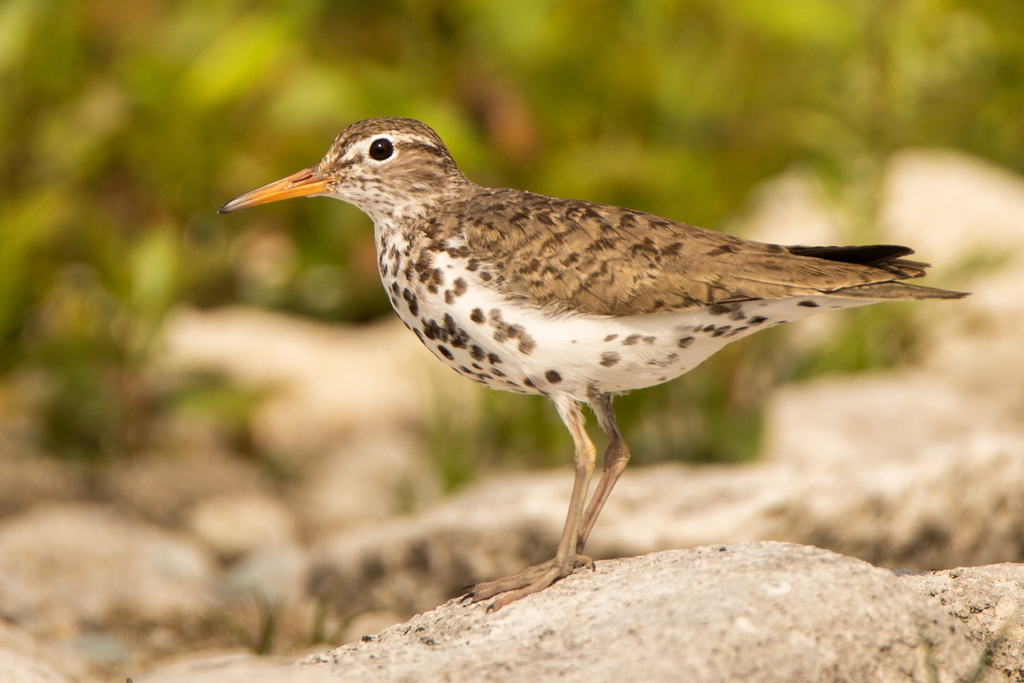
Spotted Sandpiper
Actitis macularius
Also known as: Dipper, Tip-Up, Weather Bird
Habitat
Ground
Diet
Invertebrate
Active Time
Diurnal
Size
40 g
About This Species
Watch for a small, teetering shorebird bobbing its tail constantly as it walks along the edges of rivers, lakes, and ponds, picking insects and small invertebrates from the shoreline. In breeding plumage it shows bold dark spots on a white breast, while non-breeding birds are plainer grey-brown above and white below. Spring through summer along freshwater shorelines is the best time to see breeding birds, notable for a reversed sex-role mating system in which females often mate with multiple males.
Ethical Viewing Guidelines
- Because this species nests in a simple ground scrape near water, staying well back from shoreline vegetation during the breeding season helps avoid flushing incubating birds or exposing eggs to predators.
- Migratory bird protections apply across its range in the United States, Canada, and Latin America, but specific rules differ by country, so check local guidance rather than assume a single standard.
- A distance of about 20 metres with binoculars is generally enough for good views without disturbing normal foraging.
Seasonal Activity
3,470,925 sightings · 2000–2026
Citizen science records via GBIF
Classification
- Kingdom
- Animalia
- Phylum
- Chordata
- Class
- Aves
- Order
- Charadriiformes
- Family
- Scolopacidae
Traits
- Diet
- Invertebrate
- Foraging
- Ground
- Activity
- Diurnal
- Body mass
- 40 g
Photo
(c) Jason Headley, some rights reserved (CC BY-NC), uploaded by Jason Headley
CC-BY-NC-4.0
Occurrence data from GBIF.