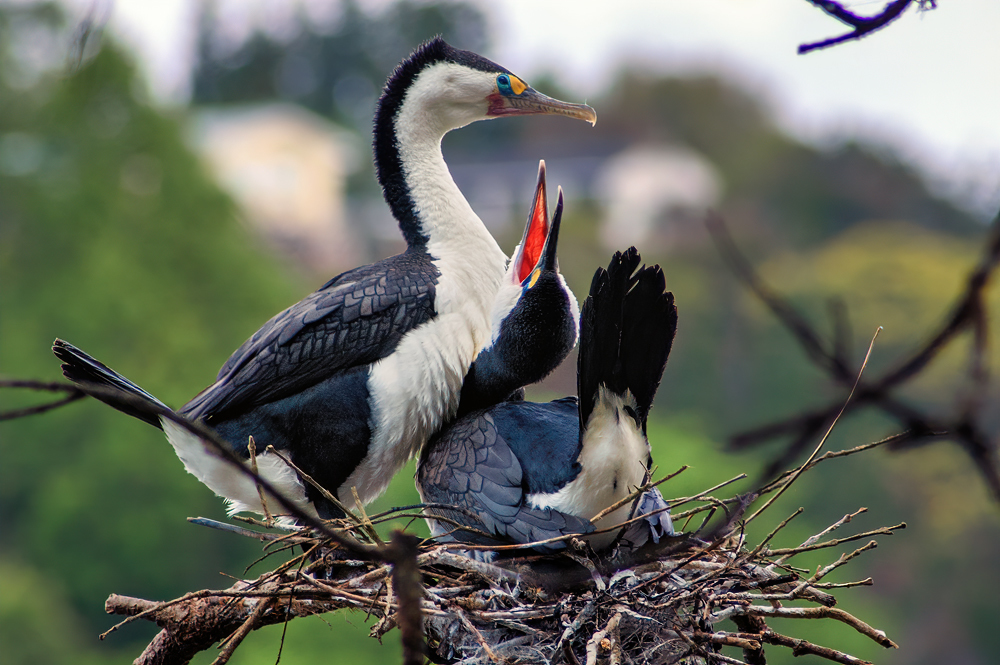
Pied Cormorant
Phalacrocorax varius
Also known as: Australian Pied Cormorant, Great Pied Cormorant, Pied Shag, Large Pied Cormorant
About This Species
Look for a black-and-white waterbird diving from the surface for fish in coastal bays, estuaries, and inland waters, then standing with wings half-spread to dry after fishing. It often roosts and nests communally on rocky islets, dead trees, or jetties, making colonies easy to locate once found. Any season can bring sightings, though breeding colonies are most active and visible in spring and summer.
Ethical Viewing Guidelines
- Viewing from a distance with binoculars is far preferable to approaching a roost or colony directly, since flushing birds from a communal site can cause repeated, costly disturbance to many individuals at once.
- Colonial waterbird nesting sites are protected under wildlife law in much of this species' Australian and New Zealand range, though specific setback distances vary by jurisdiction.
- Boats and foot traffic should keep well clear of visible roosting or nesting trees, particularly during the breeding season.
LCAvesSuliformesPhalacrocoracidae
Seasonal Activity
323,224 sightings · 2000–2026
Citizen science records via GBIF
All monthsThis month
Classification
- Kingdom
- Animalia
- Phylum
- Chordata
- Class
- Aves
- Order
- Suliformes
- Family
- Phalacrocoracidae
Photo
(c) Bernd Dietrich, some rights reserved (CC BY-NC), uploaded by Bernd Dietrich
CC-BY-NC-4.0
Occurrence data from GBIF.