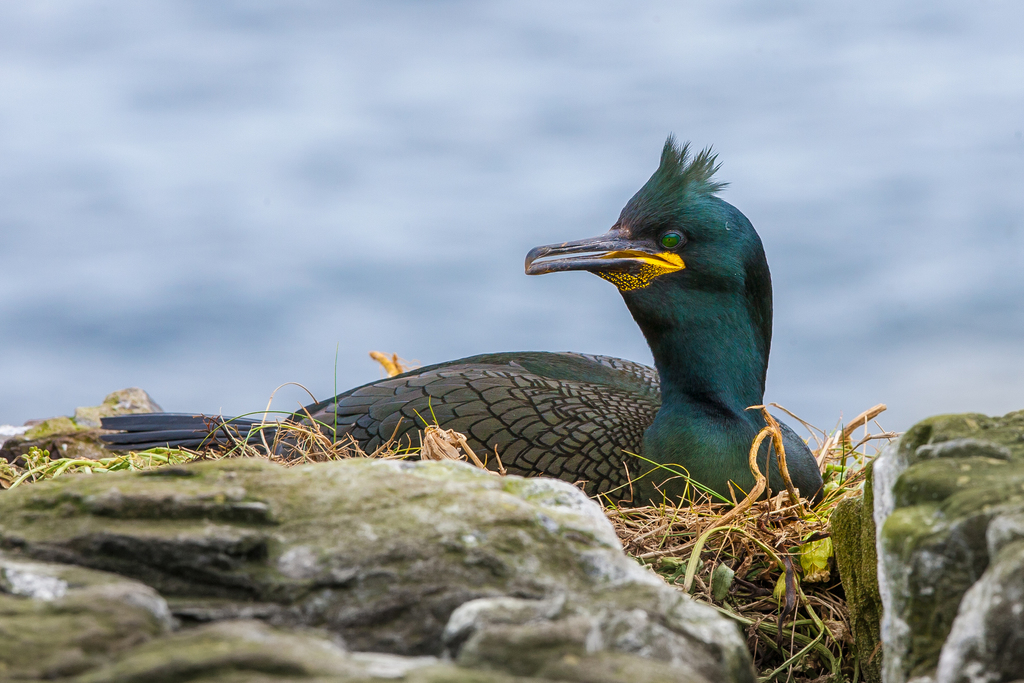
European Shag
Phalacrocorax aristotelis
Also known as: Shag
Habitat
Aquatic
Diet
VertFishScav
Active Time
Diurnal
Size
1.8 kg
About This Species
This dark, glossy cormorant nests on rocky sea cliffs and forages in coastal waters around the eastern Atlantic and Mediterranean, diving from the surface to pursue small fish underwater. Breeding adults develop a distinctive forward-curving crest, and colonies are often located by their guttural, croaking calls and the strong smell of guano on ledges. Spring is the best time to see breeding plumage and colony activity, while birds can be watched fishing close to shore throughout the year.
Ethical Viewing Guidelines
- Viewing nesting cliffs from a boat or clifftop path at a distance that does not cause birds to flush is the safest approach, since disturbed adults may abandon eggs or chicks to gulls and other predators.
- Protection law for seabird colonies differs across the countries bordering its range in Europe and North Africa, so local designations should be checked rather than assumed.
- Keeping well back from cliff edges also protects the observer, independent of any wildlife consideration.
LCAvesSuliformesPhalacrocoracidae
Seasonal Activity
457,089 sightings · 2000–2026
Citizen science records via GBIF
All monthsThis month
Classification
- Kingdom
- Animalia
- Phylum
- Chordata
- Class
- Aves
- Order
- Suliformes
- Family
- Phalacrocoracidae
Traits
- Diet
- VertFishScav
- Foraging
- Aquatic
- Activity
- Diurnal
- Body mass
- 1.8 kg
Photo
(c) Tony, some rights reserved (CC BY)
CC-BY-4.0
Occurrence data from GBIF.