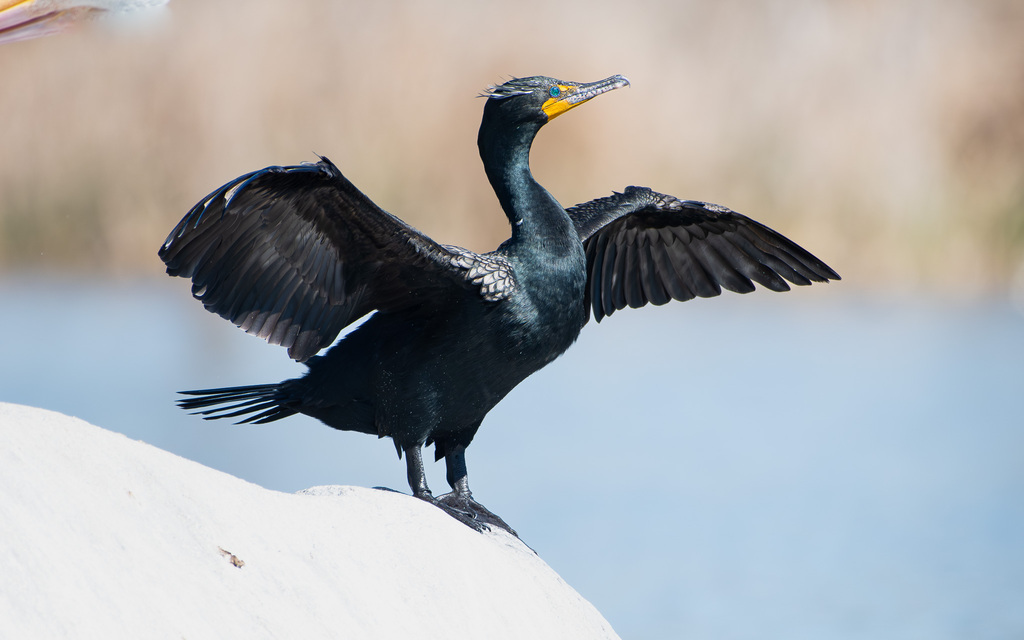
Double-Crested Cormorant
Phalacrocorax auritus
Habitat
Aquatic
Diet
VertFishScav
Active Time
Diurnal
Size
1.8 kg
About This Species
Watch for this dark waterbird perched upright on pilings, snags, or buoys with its wings held open to dry, a distinctive posture among North American waterbirds since its feathers are not fully waterproof. It dives from the surface to chase fish underwater and resurfaces some distance away, often in loose groups on lakes, rivers, and coastal bays. Early morning is a good time to watch feeding activity before boat traffic picks up, and the wing-drying posture is easiest to spot on cool or overcast days.
Ethical Viewing Guidelines
- View from a distance with binoculars rather than approaching roosts or nesting colonies, since cormorants are prone to flushing off nests and abandoning eggs or chicks to exposure and predators when disturbed.
- In the US and Canada they are protected under migratory bird treaty legislation, and colony sites often have seasonal access restrictions; comparable protections apply across much of their range but check local rules before visiting a known colony.
- Staying in a vehicle or blind near shorelines usually allows closer views without triggering a flush response.
Seasonal Activity
10,193,025 sightings · 2000–2026
Citizen science records via GBIF
Classification
- Kingdom
- Animalia
- Phylum
- Chordata
- Class
- Aves
- Order
- Suliformes
- Family
- Phalacrocoracidae
Traits
- Diet
- VertFishScav
- Foraging
- Aquatic
- Activity
- Diurnal
- Body mass
- 1.8 kg
Photo
(c) Ben Martin Mortimer, some rights reserved (CC BY-NC), uploaded by Ben Martin Mortimer
CC-BY-NC-4.0
Occurrence data from GBIF.