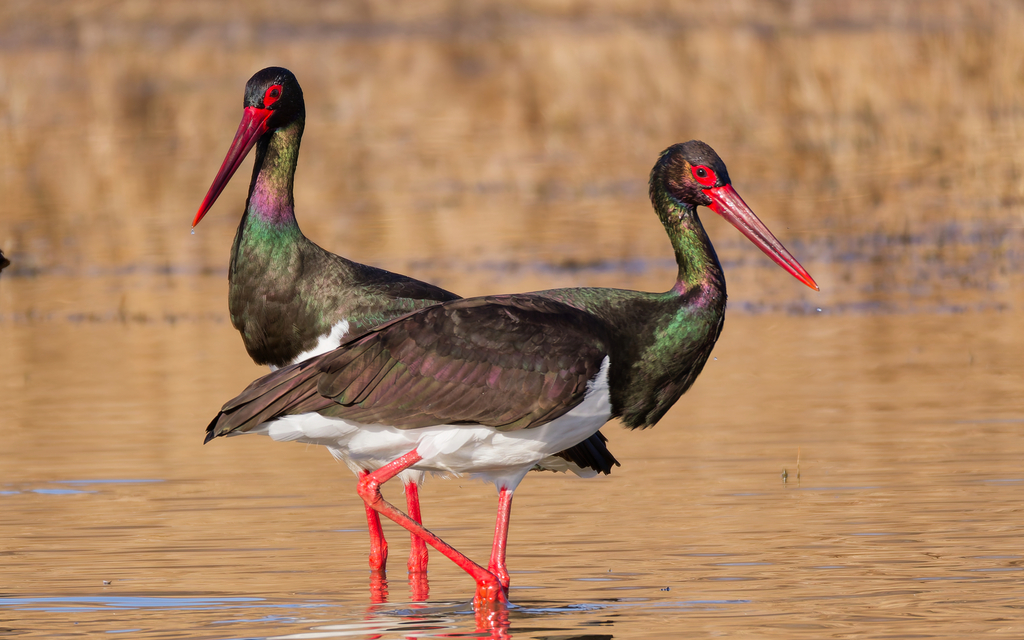
Black Stork
Ciconia nigra
Habitat
Aquatic
Diet
VertFishScav
Active Time
Diurnal
Size
2.9 kg
About This Species
Far shyer and more solitary than its white relative, this stork favours undisturbed wetlands, river valleys and forest pools across its Eurasian breeding range, wading slowly at the water's edge to hunt fish and amphibians. It is best looked for around dawn and dusk near quiet, well-vegetated water, and migrating birds can sometimes be seen soaring in small groups on thermals in spring and autumn. Its glossy black plumage with a white belly and red bill and legs make it unmistakable once spotted.
Ethical Viewing Guidelines
- Because it is notably disturbance-sensitive and prone to abandoning nests if approached, a wide distance of at least a few hundred metres is recommended near nest sites, with closer views best obtained from a hide or vehicle.
- It is a strictly protected species under wildlife law across most of its European and Asian range, including EU nature directives, and disturbing breeding birds can carry legal penalties.
- Avoid entering wetland habitat during the breeding season and never approach a nest directly.
LCAvesCiconiiformesCiconiidae
Seasonal Activity
360,096 sightings · 2000–2026
Citizen science records via GBIF
All monthsThis month
Classification
- Kingdom
- Animalia
- Phylum
- Chordata
- Class
- Aves
- Order
- Ciconiiformes
- Family
- Ciconiidae
Traits
- Diet
- VertFishScav
- Foraging
- Aquatic
- Activity
- Diurnal
- Body mass
- 2.9 kg
Photo
(c) Zinogre, some rights reserved (CC BY-SA), uploaded by Zinogre
CC-BY-SA-4.0
Occurrence data from GBIF.