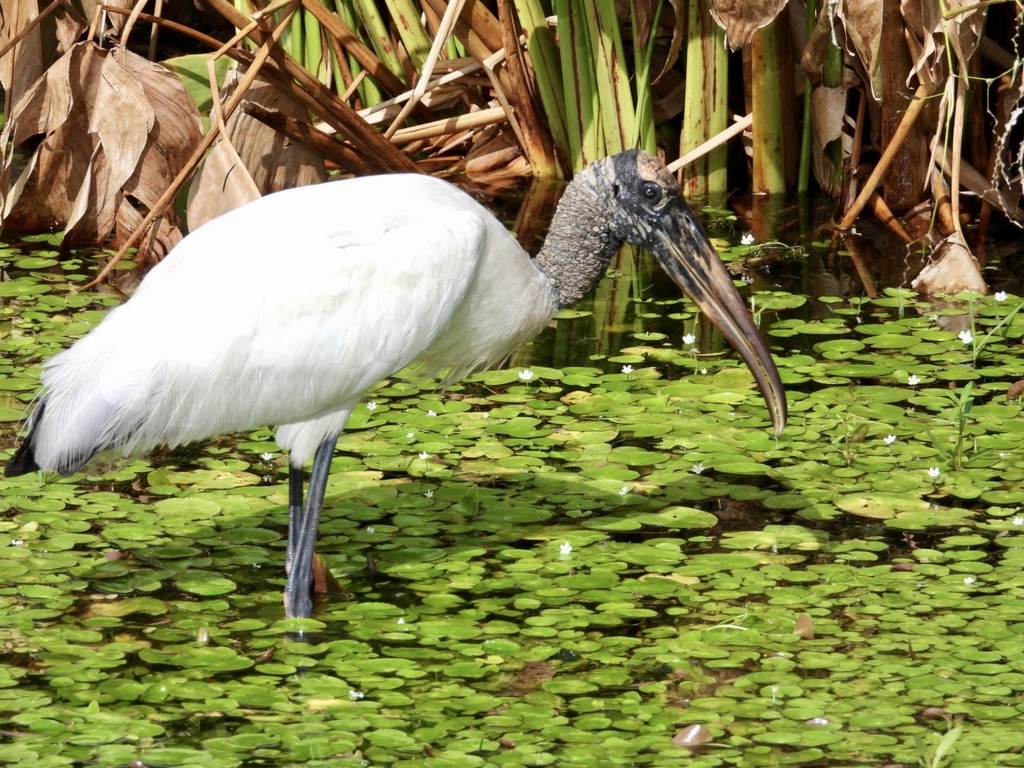
Wood Stork
Mycteria americana
Also known as: American Wood Ibis, Flinthead, Old Flinthead, Wood Ibis
About This Species
Wades slowly through shallow wetlands, marshes, and mangrove swamps, probing the water with its bill to detect fish by touch rather than sight. Often seen standing motionless or soaring on thermals in large kettles alongside other wading birds. Best looked for at dawn or dusk during the dry season, when falling water levels concentrate fish in shrinking pools and draw large feeding flocks.
Ethical Viewing Guidelines
- Keep a respectful distance of at least 50 metres, more at nesting colonies, since disturbance can cause adults to abandon nests and young to fall or flee prematurely.
- It is protected under the US Migratory Bird Treaty Act and equivalent wildlife laws across its Central and South American range, so approaching, feeding, or flushing it can be a legal offence as well as harmful.
- Viewing from a vehicle, hide, or boardwalk rather than approaching on foot across open wetland minimises stress.
LCAvesCiconiiformesCiconiidae
Seasonal Activity
831,477 sightings · 2000–2026
Citizen science records via GBIF
All monthsThis month
Classification
- Kingdom
- Animalia
- Phylum
- Chordata
- Class
- Aves
- Order
- Ciconiiformes
- Family
- Ciconiidae
Photo
(c) jenarricale, some rights reserved (CC BY-NC)
CC-BY-NC-4.0
Occurrence data from GBIF.