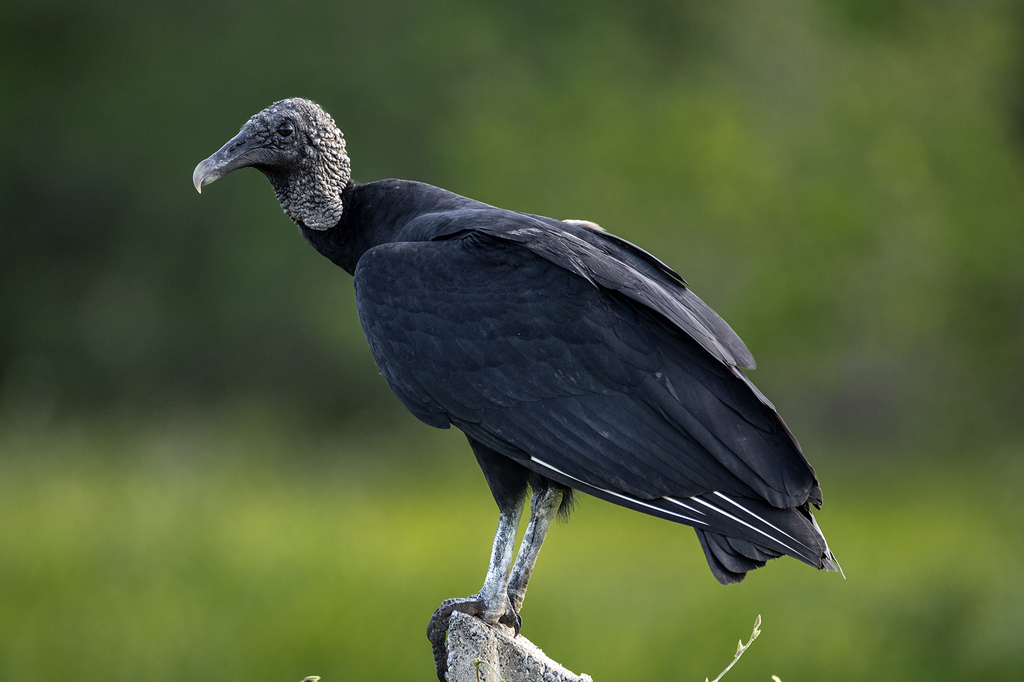
Black Vulture
Coragyps atratus
Also known as: American Black Vulture
Habitat
Ground
Diet
VertFishScav
Active Time
Diurnal
Size
1.9 kg
About This Species
Distinguish this scavenger from the similar turkey vulture by its flatter-winged soaring style and shorter tail, most often seen over open farmland and forest edge in the southeastern US and Central and South America, with numbers increasingly common in suburban areas. It roosts communally in large numbers in trees or on towers, visible at dawn and dusk, and gathers at carcasses including roadkill. Midday, once thermals develop, is best for watching it soar.
Ethical Viewing Guidelines
- It can react to close disturbance at a roost or nest by regurgitating as a defense, so keeping a comfortable distance benefits both the bird and the observer, and communal roosts are worth watching from afar rather than approaching.
- It is protected under the Migratory Bird Treaty Act in the US, though it is also subject to limited control permits in some agricultural conflict situations.
- Avoid approaching roost trees or towers directly, particularly at dawn and dusk when birds are settling or departing.
Seasonal Activity
6,297,198 sightings · 2000–2026
Citizen science records via GBIF
Classification
- Kingdom
- Animalia
- Phylum
- Chordata
- Class
- Aves
- Order
- Accipitriformes
- Family
- Cathartidae
Traits
- Diet
- VertFishScav
- Foraging
- Ground
- Activity
- Diurnal
- Body mass
- 1.9 kg
Photo
(c) eduardovieira17, some rights reserved (CC BY-NC), uploaded by eduardovieira17
CC-BY-NC-4.0
Occurrence data from GBIF.