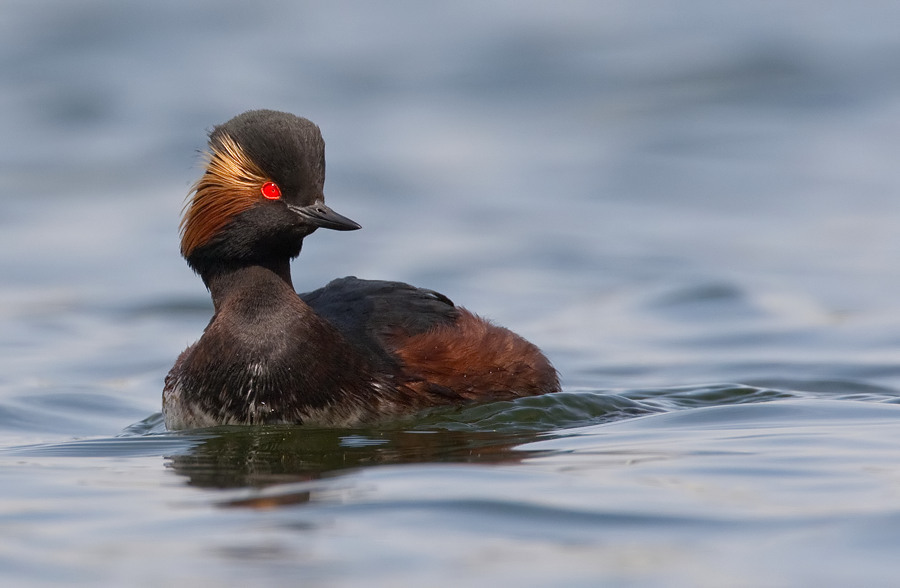
Black-Necked Grebe
Podiceps nigricollis
Also known as: Eared Grebe
Habitat
Aquatic
Diet
Invertebrate
Active Time
Diurnal
Size
412 g
About This Species
Look for this compact, dark waterbird on open freshwater lakes, reservoirs, and saline lagoons, where it dives repeatedly in shallow water to snatch invertebrates, often in loose flocks during migration and winter. In breeding plumage, the rich chestnut flanks and golden-yellow ear tufts fanning behind the eye are unmistakable at close range, while the thin, slightly upturned bill distinguishes it from similar grebes; listen for a soft, fluted *pu-eet* call during courtship gatherings. Peak viewing comes in spring at colonial breeding sites when display behavior is most active, and again in autumn when large post-breeding congregations assemble on sheltered lakes before departure — scan the water's surface at dawn and dusk, as activity intensifies during these crepuscular windows.
Ethical Viewing Guidelines
- Maintain a minimum viewing distance of 30–50 metres, increasing to at least 100 metres during breeding season (April–July) when nesting colonies are particularly sensitive to disturbance.
- Across its range, this species receives protection under instruments including the EU Birds Directive and the Migratory Bird Treaty Act in North America, while UK birds are safeguarded under the Wildlife and Countryside Act 1981, so intentional disturbance at nest sites can constitute a criminal offence.
- Use a hide or natural cover, avoid sudden movements and loud noise, keep dogs on leads near wetland habitats, and depart immediately if birds display alert postures, dive repeatedly, or abandon nests.
Seasonal Activity
1,355,581 sightings · 2000–2026
Citizen science records via GBIF
Classification
- Kingdom
- Animalia
- Phylum
- Chordata
- Class
- Aves
- Order
- Podicipediformes
- Family
- Podicipedidae
Traits
- Diet
- Invertebrate
- Foraging
- Aquatic
- Activity
- Diurnal
- Body mass
- 412 g
Photo
(c) Paul Cools, some rights reserved (CC BY-NC), uploaded by Paul Cools
CC-BY-NC-4.0
Occurrence data from GBIF.