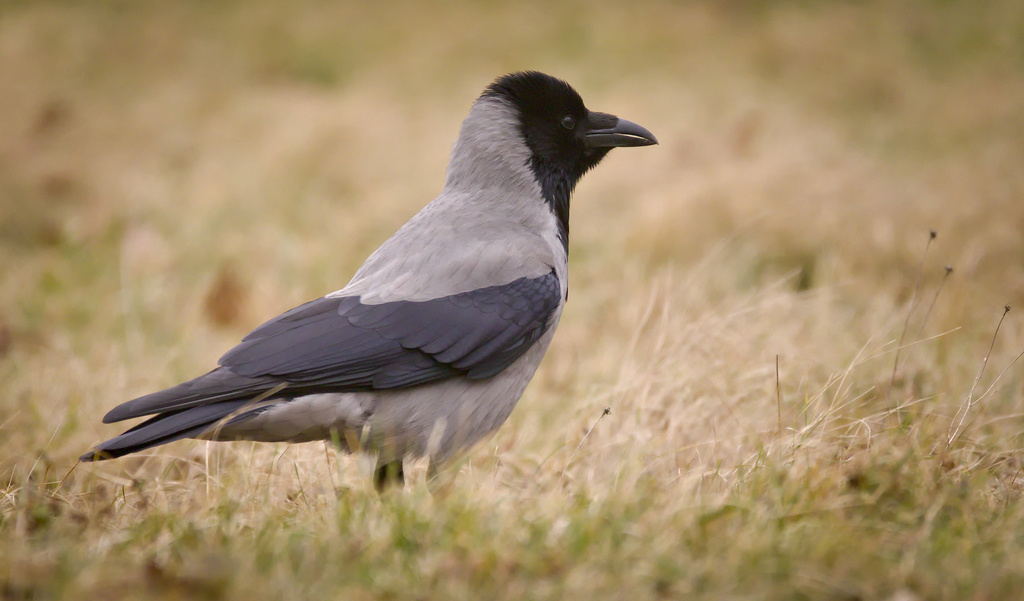
Hooded Crow
Corvus cornix
About This Species
Watch open country, coastlines, farmland, and town edges across northern and eastern Europe, where this grey-bodied, black-headed and black-winged crow forages on the ground for almost anything edible, from carrion and invertebrates to scraps around settlements. It is a bold, adaptable opportunist, often seen alone or in loose pairs rather than large flocks, and its harsh, guttural croaking call carries well across open ground. It can be watched year-round, with autumn and winter bringing more birds into farmland and coastal areas as they follow food availability.
Ethical Viewing Guidelines
- A generally wary and intelligent bird, it will usually keep its own distance from people, so there is rarely a need to approach closely; observing from 20 metres or more with binoculars is sufficient and avoids habituating it to handouts.
- Legal protection for corvids varies by country within its European range, with some jurisdictions allowing control in specific agricultural contexts while still protecting active nests, so avoid disturbing any nest site regardless of local rules on the species generally.
- Give a wide berth to any nesting pair, since crows can become defensive and repeatedly mob intruders near young.
NEAvesPasseriformesCorvidae
Seasonal Activity
3,918,588 sightings · 2000–2026
Citizen science records via GBIF
All monthsThis month
Classification
- Kingdom
- Animalia
- Phylum
- Chordata
- Class
- Aves
- Order
- Passeriformes
- Family
- Corvidae
Photo
(c) hedera.baltica, some rights reserved (CC BY-SA)
CC-BY-SA-4.0
Occurrence data from GBIF.