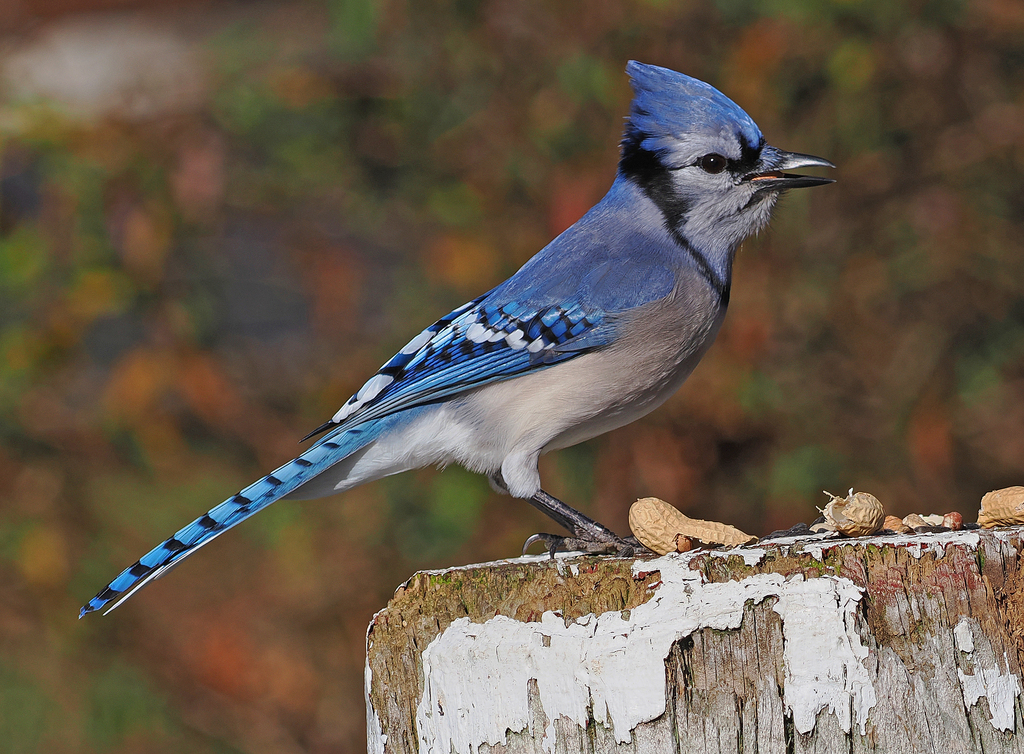
Blue Jay
Cyanocitta cristata
Habitat
Ground
Diet
Omnivore
Active Time
Diurnal
Size
88 g
About This Species
Loud, harsh calls, including uncanny imitations of red-shouldered hawks, often give away a presence in deciduous and mixed woodland, parks, and wooded backyards before any blue-and-white plumage comes into view. Autumn is a particularly good season to watch, when family groups cache acorns in loose soil and visit feeders stocked with peanuts or sunflower seed.
Ethical Viewing Guidelines
- A comfortable few metres of distance lets normal foraging and caching behaviour continue undisturbed.
- As a native North American songbird, nests, eggs, and adults are protected under the Migratory Bird Treaty Act, so nests should never be approached closely or handled, particularly in spring when adults are actively defending a territory.
LCAvesPasseriformesCorvidae
Seasonal Activity
23,120,513 sightings · 2000–2026
Citizen science records via GBIF
All monthsThis month
Classification
- Kingdom
- Animalia
- Phylum
- Chordata
- Class
- Aves
- Order
- Passeriformes
- Family
- Corvidae
Traits
- Diet
- Omnivore
- Foraging
- Ground
- Activity
- Diurnal
- Body mass
- 88 g
Photo
(c) Judy Gallagher, some rights reserved (CC BY)
CC-BY-4.0
Occurrence data from GBIF.