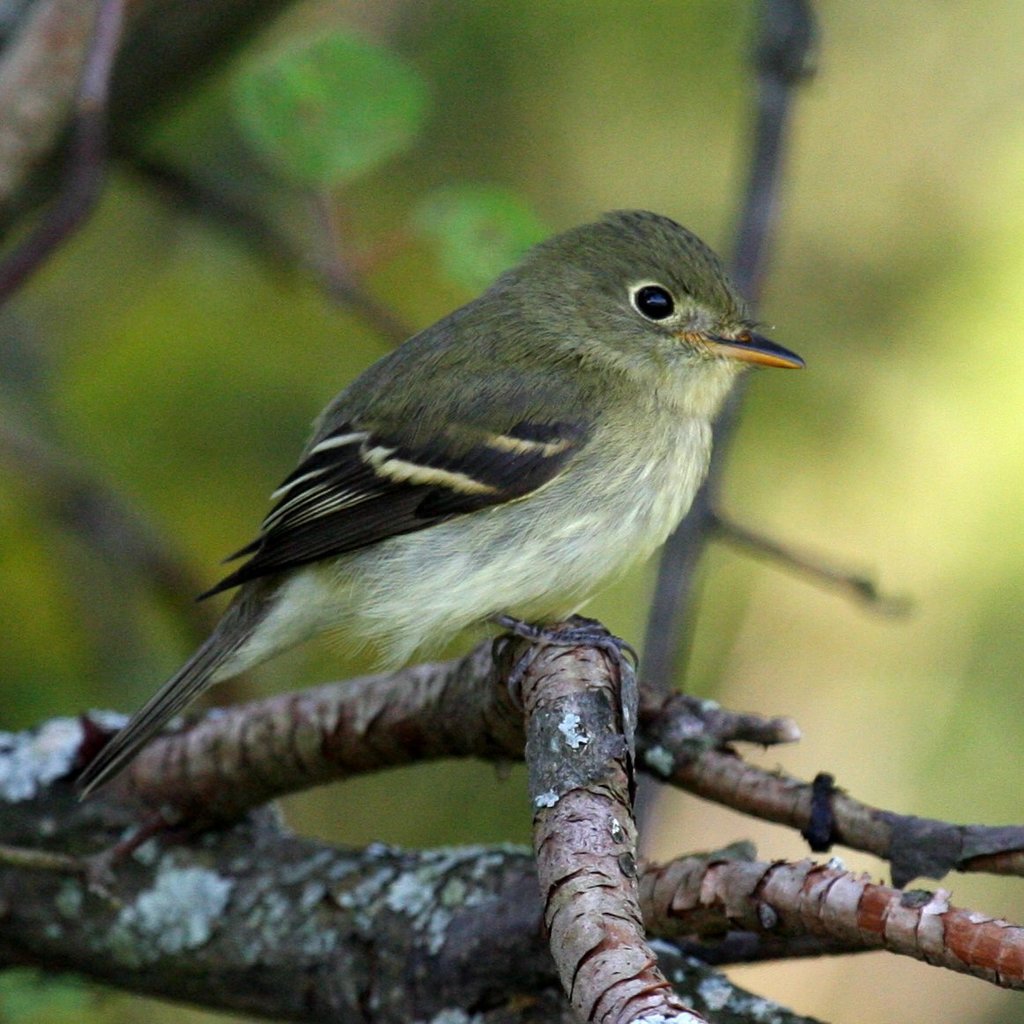
Yellow-Bellied Flycatcher
Empidonax flaviventris
Habitat
Understory
Diet
Invertebrate
Active Time
Diurnal
Size
12 g
About This Species
This small, quiet flycatcher favors the shaded understory and edges of wet boreal and mixed forest, perching low and sallying out briefly to snatch flying insects before returning to the same spot. Its distinctive rising "chu-wee" call is often the best way to detect it, since it can sit motionless for long stretches. Look and listen for it during its breeding season in northern forests, or watch understory tangles in its wintering range in Central America; activity is heaviest at dawn, dusk and other low-light periods.
Ethical Viewing Guidelines
- Keep a respectful distance and avoid repeated pishing or playback, which can pull a territorial male away from feeding and nest defense during the breeding season.
- In the United States and Canada it is protected under the Migratory Bird Treaty Act and the Migratory Birds Convention Act, making it illegal to disturb nests or collect eggs; protections on its Central American wintering grounds vary by country.
- Because it nests in low, often well-hidden shrub sites, searching for or approaching a nest is best avoided entirely.
LCAvesPasseriformesTyrannidae
Seasonal Activity
308,246 sightings · 2000–2026
Citizen science records via GBIF
All monthsThis month
Classification
- Kingdom
- Animalia
- Phylum
- Chordata
- Class
- Aves
- Order
- Passeriformes
- Family
- Tyrannidae
Traits
- Diet
- Invertebrate
- Foraging
- Understory
- Activity
- Diurnal
- Body mass
- 12 g
Photo
(c) Seabamirum, some rights reserved (CC BY)
CC-BY-4.0
Occurrence data from GBIF.