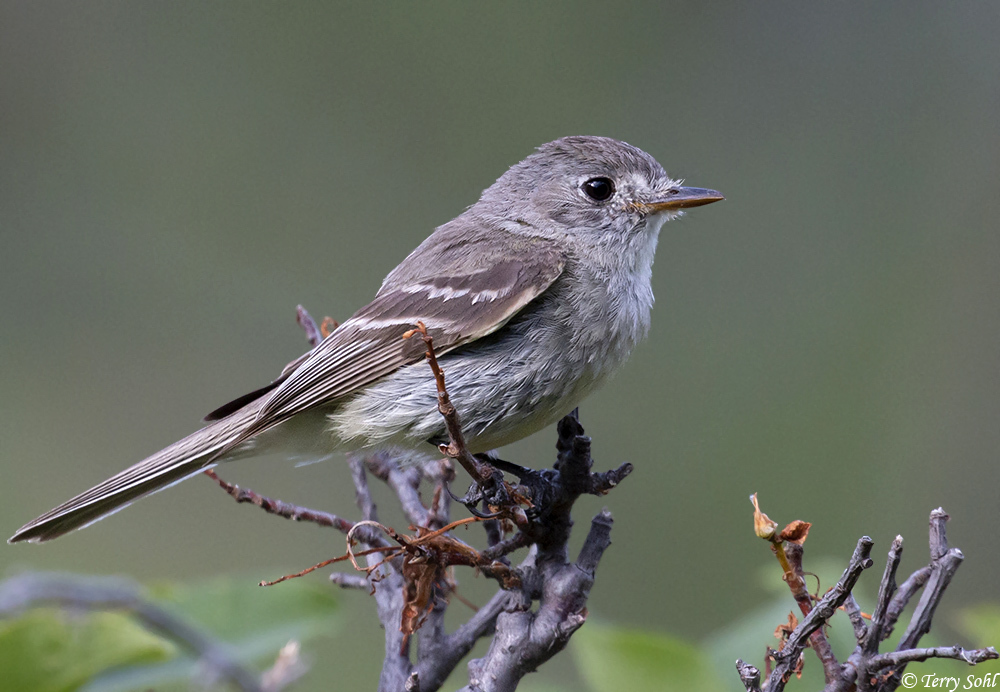
Dusky Flycatcher
Empidonax oberholseri
Also known as: American Dusky Flycatcher
About This Species
A small flycatcher of montane forests and brushy edges in western North America, it is most reliably identified by behaviour rather than plumage, since it closely resembles other Empidonax flycatchers: watch for its habit of perching upright and sallying out to catch insects, then returning to the same spot, and listen for its distinctive dry, whistled call. It is a summer breeder at higher elevations, so late spring through summer in coniferous or mixed woodland edges offers the best chance of a sighting. Migration periods can bring it through lower-elevation scrub as well.
Ethical Viewing Guidelines
- This is a common species without elevated conservation status, so typical birdwatching distances of several metres with binoculars are appropriate and sufficient given its small size and active foraging habits.
- In the United States and Canada it is protected under migratory bird legislation that prohibits nest disturbance, capture, or harm, so avoid approaching nests closely during the breeding season.
- Because look-alike flycatchers are often confirmed by call rather than close viewing, there is little reason to approach nearer than normal observation distance allows.
Seasonal Activity
255,608 sightings · 2000–2026
Citizen science records via GBIF
Classification
- Kingdom
- Animalia
- Phylum
- Chordata
- Class
- Aves
- Order
- Passeriformes
- Family
- Tyrannidae
Photo
(c) Terry Sohl, some rights reserved (CC BY-NC), uploaded by Terry Sohl
CC-BY-NC-4.0
Occurrence data from GBIF.