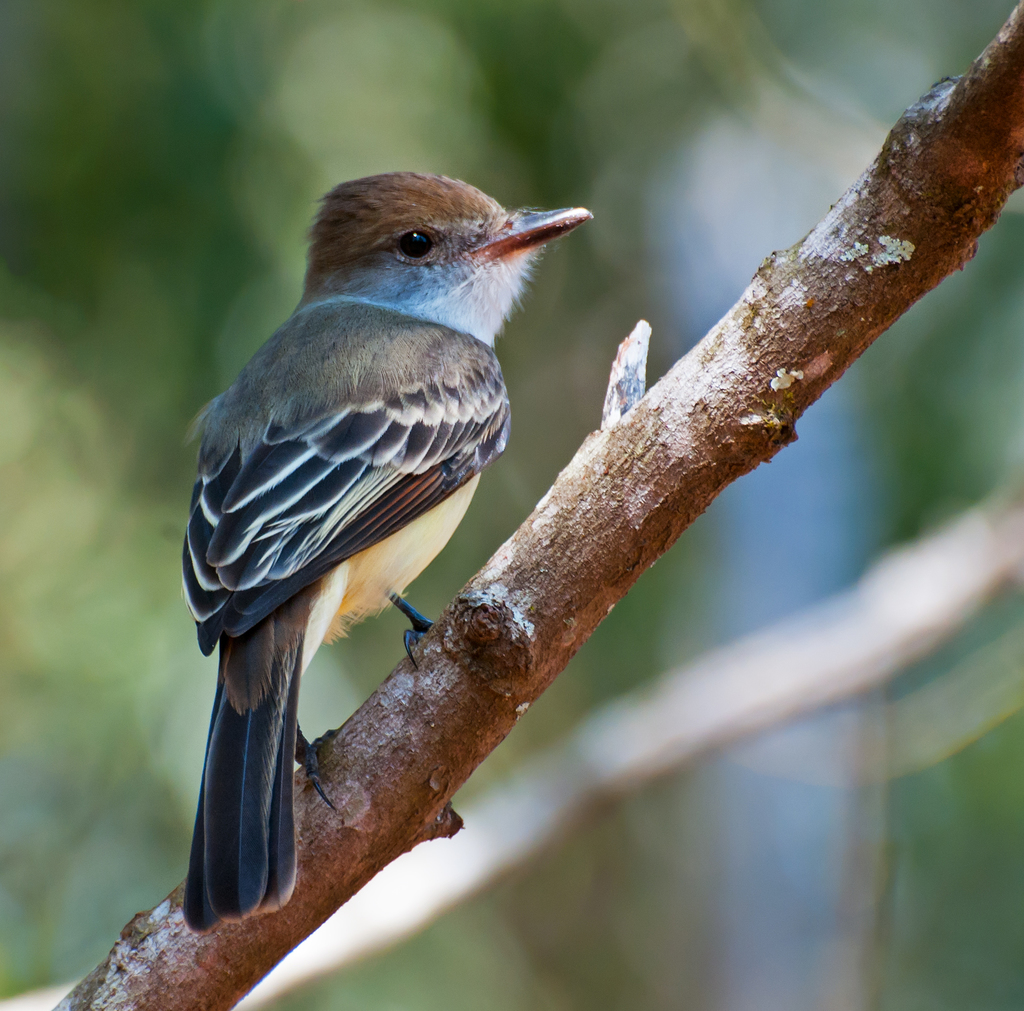
Brown-Crested Flycatcher
Myiarchus tyrannulus
Also known as: Rusty-Tailed Flycatcher
About This Species
Listen for its loud, whistled calls from desert scrub, dry woodland, and riparian corridors across the southwestern United States, Mexico, and Central America, where this large flycatcher nests in tree cavities and old woodpecker holes. It hunts by sallying out from a perch to catch flying insects and returning to the same spot, a pattern that makes it easier to relocate once found. Spring and summer, during the breeding season in the northern part of its range, are the best times to see it.
Ethical Viewing Guidelines
- Cavity nests in dead trees or saguaros are vulnerable to disturbance, so avoid approaching a nest hole closely or disturbing the surrounding tree or cactus.
- Legal protections for native birds differ between the United States, Mexico, and Central American countries spanning its range, so check local rules rather than assuming a uniform standard.
- Watching from a distance with binoculars as it forages is both easier and less disruptive than approaching a suspected nest tree.
LCAvesPasseriformesTyrannidae
Seasonal Activity
386,668 sightings · 2000–2026
Citizen science records via GBIF
All monthsThis month
Classification
- Kingdom
- Animalia
- Phylum
- Chordata
- Class
- Aves
- Order
- Passeriformes
- Family
- Tyrannidae
Photo
(c) Dario Sanches, some rights reserved (CC BY-SA)
CC-BY-SA-4.0
Occurrence data from GBIF.