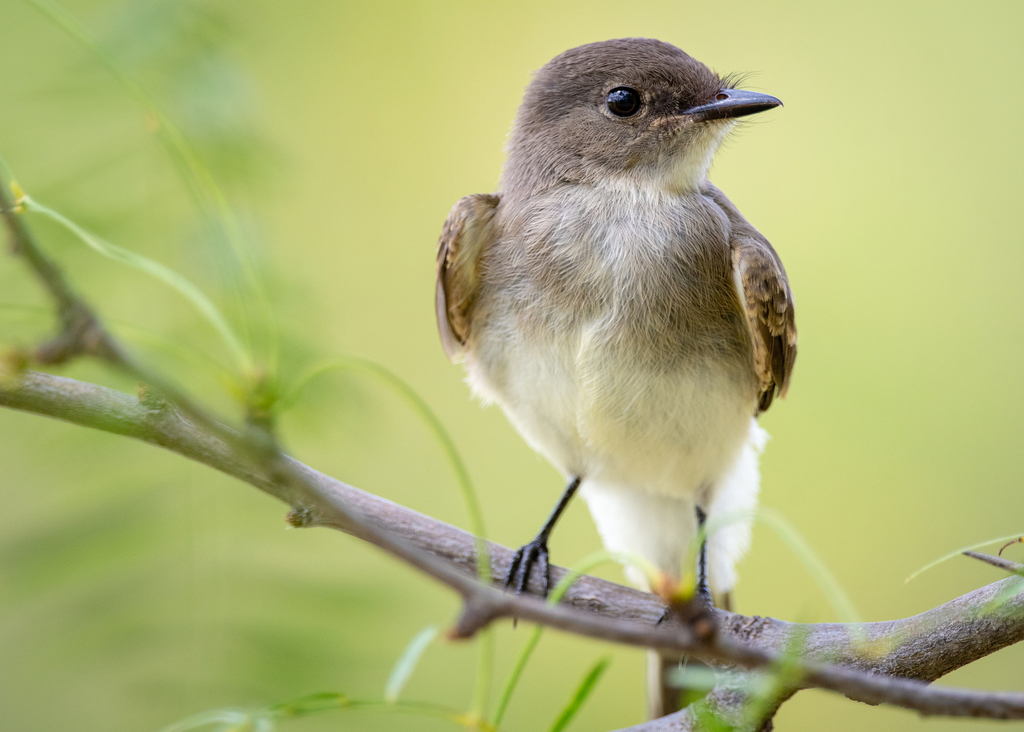
Eastern Phoebe
Sayornis phoebe
About This Species
This plain flycatcher is often found near water, bridges, barns and other structures where it builds mud nests on ledges, perching upright and pumping its tail as it watches for flying insects. It has a distinctive raspy, two-note call that sounds like its name and often returns to the same favoured perch repeatedly after sallying out to catch prey. Spring through summer near its nest sites is the easiest time to observe consistent perching behaviour.
Ethical Viewing Guidelines
- Because it frequently nests on human structures, it can be watched at a modest distance without much disturbance, but repeated close approaches to an active mud nest should still be avoided.
- General migratory bird protections across its range prohibit disturbing nests, eggs or young.
- Leaving nests on buildings undisturbed until young have fledged is the simplest way to avoid causing harm.
LCAvesPasseriformesTyrannidae
Seasonal Activity
7,028,765 sightings · 2000–2026
Citizen science records via GBIF
All monthsThis month
Classification
- Kingdom
- Animalia
- Phylum
- Chordata
- Class
- Aves
- Order
- Passeriformes
- Family
- Tyrannidae
Photo
(c) Kerry Carloy, some rights reserved (CC BY-NC), uploaded by Kerry Carloy
CC-BY-NC-4.0
Occurrence data from GBIF.