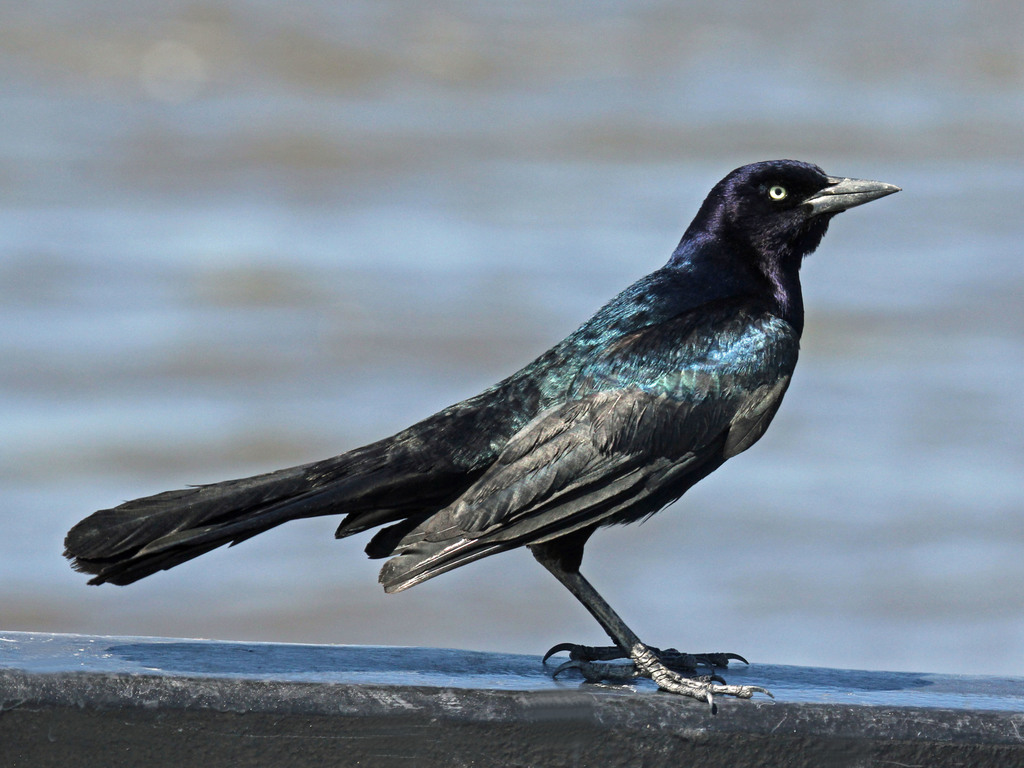
Boat-Tailed Grackle
Quiscalus major
Habitat
Ground
Diet
Omnivore
Active Time
Diurnal
Size
151 g
About This Species
Look for glossy black birds with a long, keel-shaped tail perched on marsh vegetation, mangroves or dock pilings along the southeastern and Gulf Coast of the United States. Males perform loud, harsh vocal displays and tail-spreading postures around breeding colonies in spring and summer, while females are notably smaller and browner. Salt marshes and coastal wetlands at low tide often provide the clearest views as birds forage on exposed mud.
Ethical Viewing Guidelines
- Keep back from breeding colonies by at least 20 to 30 metres, since grackles nest colonially in dense stands of marsh vegetation that are easily disturbed.
- It is protected under the Migratory Bird Treaty Act in the United States, which prohibits disturbing active nests, though this species is also sometimes subject to local management due to its abundance.
- Avoid walking through marsh vegetation during the spring nesting season to prevent trampling nests hidden low in the reeds.
LCAvesPasseriformesIcteridae
Seasonal Activity
1,498,626 sightings · 2000–2026
Citizen science records via GBIF
All monthsThis month
Classification
- Kingdom
- Animalia
- Phylum
- Chordata
- Class
- Aves
- Order
- Passeriformes
- Family
- Icteridae
Traits
- Diet
- Omnivore
- Foraging
- Ground
- Activity
- Diurnal
- Body mass
- 151 g
Photo
(c) DickDaniels, some rights reserved (CC BY-SA)
CC-BY-SA-4.0
Occurrence data from GBIF.