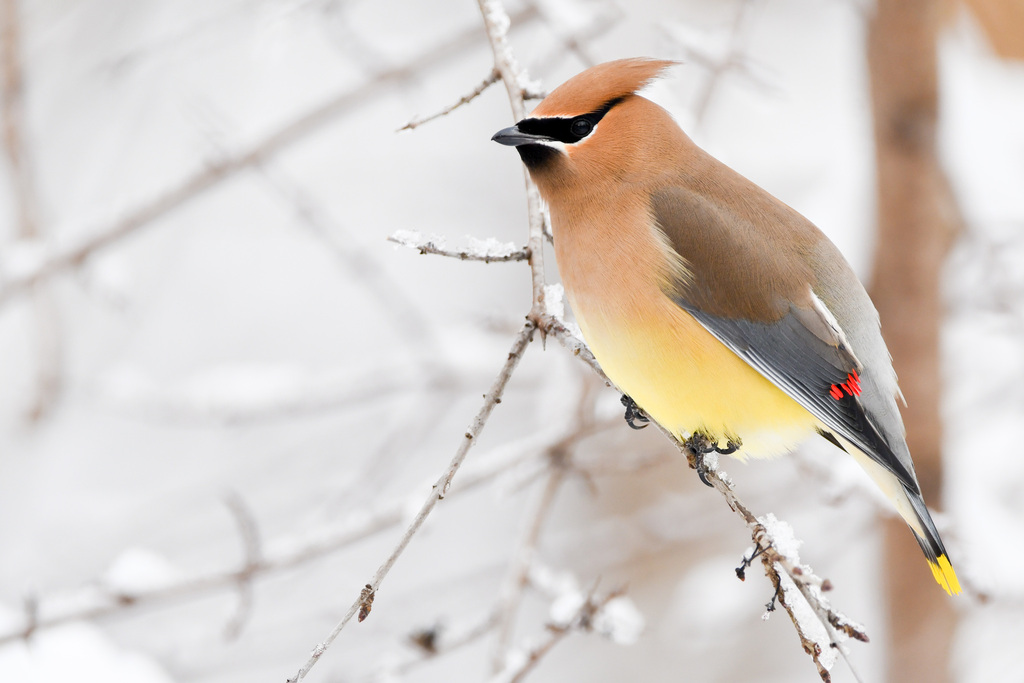
Cedar Waxwing
Bombycilla cedrorum
Habitat
Understory
Diet
FruiNect
Active Time
Diurnal
Size
32 g
About This Species
Look for flocks moving nomadically through open woodland, orchards and gardens wherever berries are ripe, since this species' movements track fruit availability rather than a fixed season. Its sleek crest, silky brown plumage and waxy red wingtips are distinctive at close range, and its thin, high-pitched trilling call often reveals a flock before it's seen. Late summer through winter, near fruiting trees and shrubs, tends to produce the largest and most active flocks.
Ethical Viewing Guidelines
- Flocks feeding on fruit are often approachable and tolerate quiet observers reasonably well, but avoid pressing in close enough to scatter a feeding group repeatedly, which wastes their energy.
- General migratory bird protections across its range prohibit disturbing nests or handling birds.
- Watching quietly from a short distance near fruiting trees is usually all that's needed for good views.
LCAvesPasseriformesBombycillidae
Seasonal Activity
6,937,584 sightings · 2000–2026
Citizen science records via GBIF
All monthsThis month
Classification
- Kingdom
- Animalia
- Phylum
- Chordata
- Class
- Aves
- Order
- Passeriformes
- Family
- Bombycillidae
Traits
- Diet
- FruiNect
- Foraging
- Understory
- Activity
- Diurnal
- Body mass
- 32 g
Photo
(c) Manny Salas, some rights reserved (CC BY-NC), uploaded by Manny Salas
CC-BY-NC-4.0
Occurrence data from GBIF.