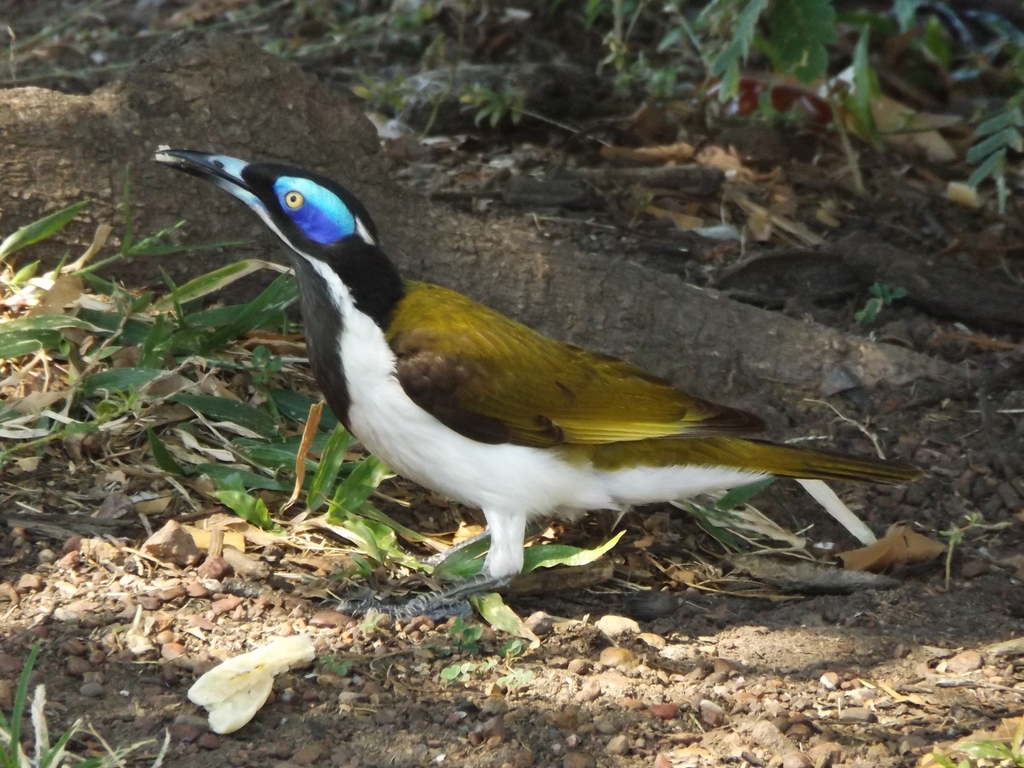
Blue-Faced Honeyeater
Entomyzon cyanotis
Habitat
Mid-canopy
Diet
Invertebrate
Active Time
Diurnal
Size
105 g
About This Species
A noisy, gregarious honeyeater of open woodlands, parks and gardens across northern and eastern Australia and New Guinea, usually encountered in small chattering groups working the mid-canopy for nectar, insects and fruit. Its blue facial skin and loud, ringing calls make it easy to pick out even before it comes into view. Flowering eucalypts, grevilleas and bottlebrush are reliable places to find it feeding, and it is active and vocal for much of the day.
Ethical Viewing Guidelines
- This is a bold, adaptable species that often tolerates close observation in gardens and parks, but it is still best to let it approach a feeder or flowering shrub rather than crowding it.
- Native bird protections apply across its Australian range under state and territory wildlife legislation, with somewhat different rules in Papua New Guinea, so check local requirements if photographing or feeding it.
- Avoid handling or feeding it food that is not part of its natural diet.
LCAvesPasseriformesMeliphagidae
Seasonal Activity
317,649 sightings · 2000–2026
Citizen science records via GBIF
All monthsThis month
Classification
- Kingdom
- Animalia
- Phylum
- Chordata
- Class
- Aves
- Order
- Passeriformes
- Family
- Meliphagidae
Traits
- Diet
- Invertebrate
- Foraging
- Mid-canopy
- Activity
- Diurnal
- Body mass
- 105 g
Photo
(c) sarah macdonald, some rights reserved (CC BY-NC), uploaded by sarah macdonald
CC-BY-NC-4.0
Occurrence data from GBIF.