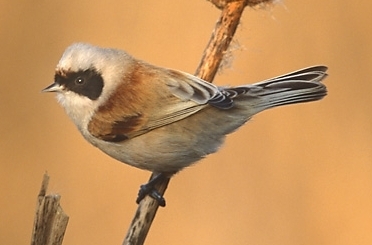
Eurasian Penduline Tit
Remiz pendulinus
Also known as: Penduline Tit, Teixidor
Habitat
Ground
Diet
Invertebrate
Active Time
Diurnal
Size
9 g
About This Species
Works reed beds, willow scrub, and riverside vegetation for small insects and seeds, often hanging acrobatically from thin stems while foraging. Listen for its thin, plaintive, whistled call, a good way to locate a bird moving through dense reed cover before it comes into view. The distinctive, tightly woven, pouch-shaped nest suspended from a slender branch is most visible in the breeding season, roughly spring into early summer, before leaf cover thickens.
Ethical Viewing Guidelines
- A distance of several metres from reed edges is enough to watch foraging birds without pushing them deeper into cover.
- It is a protected species under wild bird legislation across much of its European range, though specific rules and enforcement vary by country, so nests in particular should never be approached or handled.
- Avoid parting reeds or breaking stems to get a clearer view of a nest.
LCAvesPasseriformesRemizidae
Seasonal Activity
227,977 sightings · 2000–2026
Citizen science records via GBIF
All monthsThis month
Classification
- Kingdom
- Animalia
- Phylum
- Chordata
- Class
- Aves
- Order
- Passeriformes
- Family
- Remizidae
Traits
- Diet
- Invertebrate
- Foraging
- Ground
- Activity
- Diurnal
- Body mass
- 9 g
Photo
(c) anonymous, some rights reserved (CC BY-SA)
CC-BY-SA-4.0
Occurrence data from GBIF.