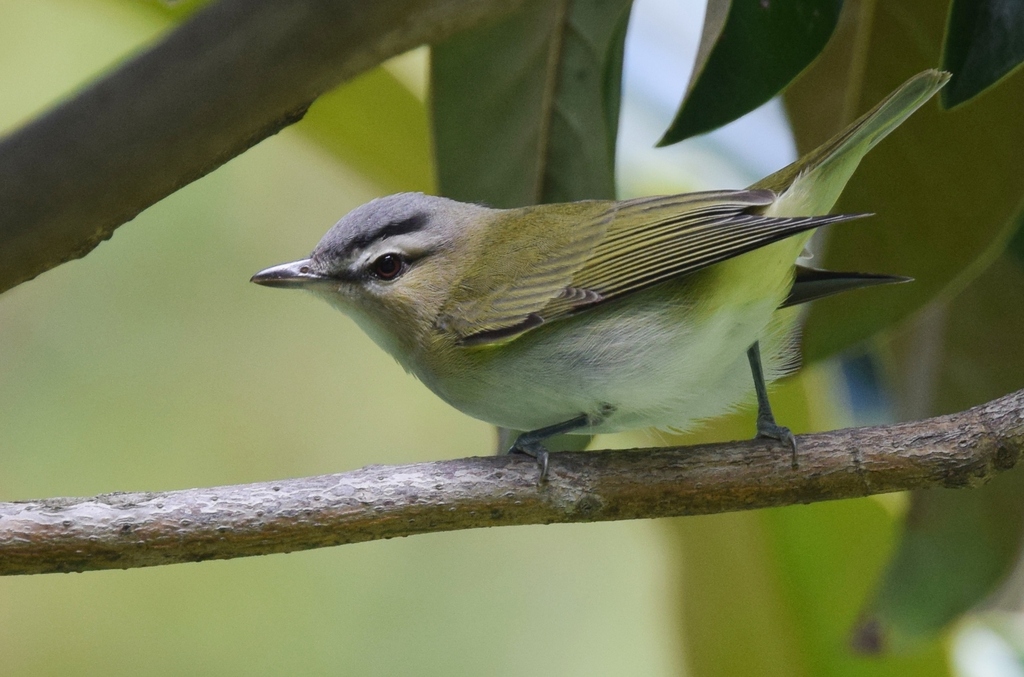
Red-Eyed Vireo
Vireo olivaceus
Habitat
Canopy
Diet
Invertebrate
Active Time
Diurnal
Size
16 g
About This Species
A plain olive-grey songbird with a pale eyebrow stripe, far more often heard than seen as it delivers a persistent, monotonous song of short phrases from high in the forest canopy through the heat of summer. It favours deciduous and mixed woodland, gleaning insects and later berries from foliage well above eye level, which makes patient sky-watching and careful listening more productive than searching low vegetation. Breeding season from late spring through summer is the best time to detect it by voice, since it can be genuinely hard to spot visually.
Ethical Viewing Guidelines
- Because it forages high in the canopy, close approach is rarely an issue, and standard birdwatching etiquette of staying on trails and avoiding prolonged playback of recorded calls is sufficient.
- Migratory songbirds are protected under laws such as the Migratory Bird Treaty Act in the US and Canada, and equivalent legislation across its Central and South American wintering range, though details vary by country.
- Limiting the use of call playback during the breeding season helps avoid diverting the bird's energy from nesting duties.
Seasonal Activity
5,689,320 sightings · 2000–2026
Citizen science records via GBIF
Classification
- Kingdom
- Animalia
- Phylum
- Chordata
- Class
- Aves
- Order
- Passeriformes
- Family
- Vireonidae
Traits
- Diet
- Invertebrate
- Foraging
- Canopy
- Activity
- Diurnal
- Body mass
- 16 g
Photo
(c) Andy Reago & Chrissy McClarren, some rights reserved (CC BY)
CC-BY-4.0
Occurrence data from GBIF.