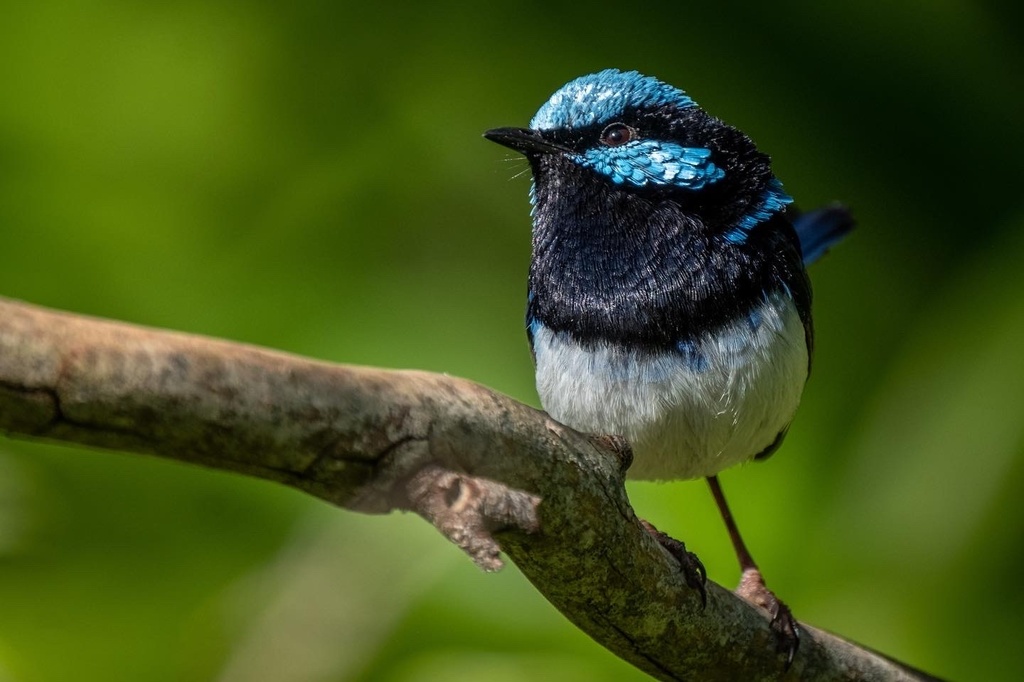
Superb Fairywren
Malurus cyaneus
Also known as: Superb Fairy-Wren, Blue Wren
About This Species
Small family groups move low through dense shrubs, coastal heath and garden understorey across south-eastern Australia, with the electric-blue and black breeding male standing out sharply against duller brown females and juveniles. Groups forage cooperatively close to cover, hopping and flicking their long cocked tails, and are often first detected by their thin, buzzing contact calls. Breeding males are in their brightest plumage through spring, which is the best time to see the full colour contrast within a family group.
Ethical Viewing Guidelines
- Because groups stay close to dense cover and are easily pushed deeper into it, standing still 5-10 metres from a shrub line and letting birds come into view works better than pushing through vegetation to follow them.
- Native birds and their nests are protected under state wildlife law across Australia, and nests built low in dense shrubs are easily damaged by trampling nearby vegetation.
- Keeping to paths in heathland and garden reserves protects both the nesting habitat and the cooperative family groups that depend on it.
LCAvesPasseriformesMaluridae
Seasonal Activity
1,355,827 sightings · 2000–2026
Citizen science records via GBIF
All monthsThis month
Classification
- Kingdom
- Animalia
- Phylum
- Chordata
- Class
- Aves
- Order
- Passeriformes
- Family
- Maluridae
Photo
(c) lightroom, some rights reserved (CC BY-NC)
CC-BY-NC-4.0
Occurrence data from GBIF.