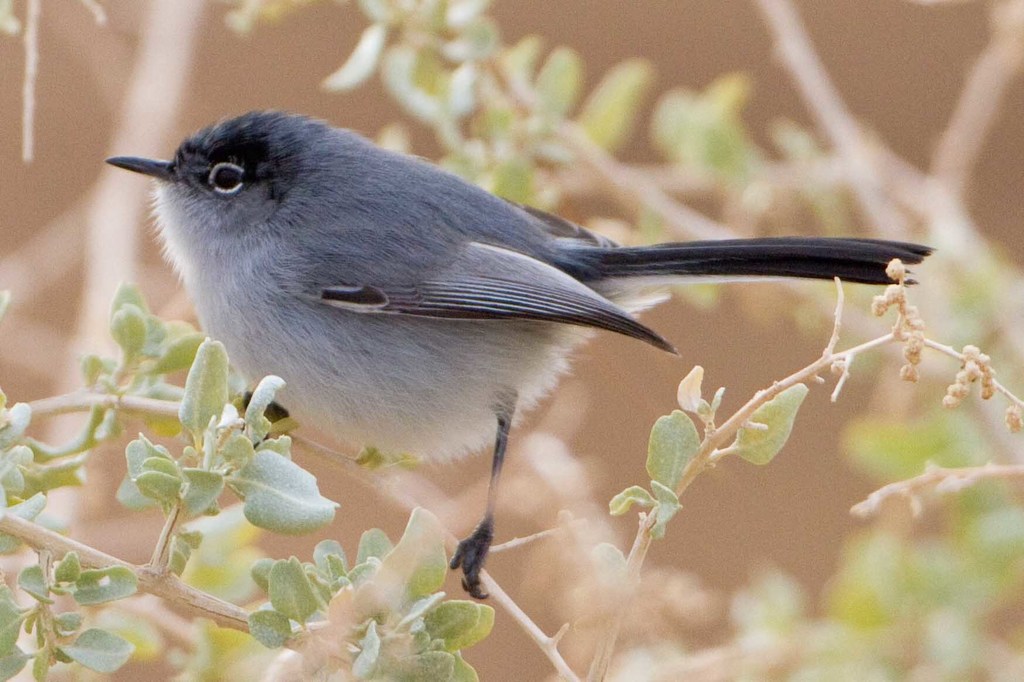
Black-Tailed Gnatcatcher
Polioptila melanura
About This Species
This small, long-tailed songbird favours dense desert scrub such as mesquite, creosote bush and thorny thickets across the arid southwestern US and Mexico, where it forages actively for insects low in the vegetation. Its thin, nasal calls and constantly flicking, wagging tail are often the first clue to its presence before it is seen. Early morning in spring and summer, when pairs are most vocal and active, offers the best viewing.
Ethical Viewing Guidelines
- Watching quietly from 5-10 metres with binoculars is generally sufficient and avoids pushing the bird deeper into cover.
- Native migratory and resident songbirds are protected in the United States under the Migratory Bird Treaty Act and in Mexico under federal wildlife law, both of which prohibit capture, harm or nest disturbance.
- Give any active nest a wide berth and resist using recorded calls to draw the bird out, since repeated playback can disrupt normal feeding and breeding behaviour.
LCAvesPasseriformesPolioptilidae
Seasonal Activity
244,168 sightings · 2000–2026
Citizen science records via GBIF
All monthsThis month
Classification
- Kingdom
- Animalia
- Phylum
- Chordata
- Class
- Aves
- Order
- Passeriformes
- Family
- Polioptilidae
Photo
(c) BJ Stacey, some rights reserved (CC BY-NC)
CC-BY-NC-4.0
Occurrence data from GBIF.