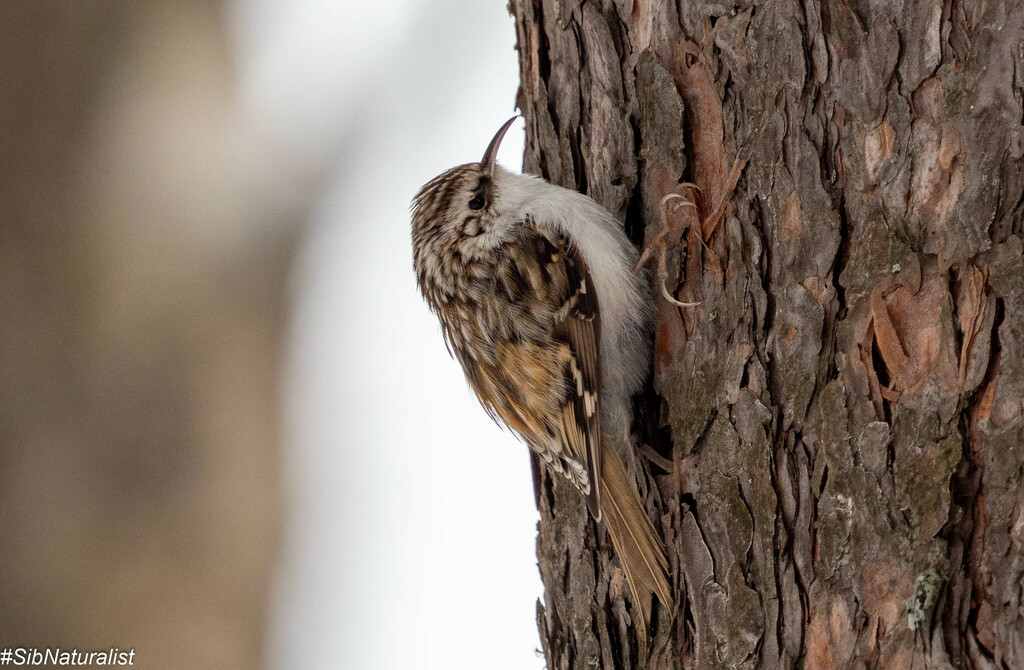
Eurasian Treecreeper
Certhia familiaris
Also known as: Treecreeper, Tree Creeper, Common Treecreeper
Habitat
Ground
Diet
Invertebrate
Active Time
Diurnal
Size
9 g
About This Species
This small, cryptically barked bird is best located by its very high, thin call as it climbs in a spiral up a tree trunk, probing bark crevices with its curved bill for insects and spiders before dropping to the base of the next tree. It favours mature woodland, particularly conifers and old broadleaf trees with rough bark, across northern and montane Europe and Asia. Winter and early spring, when foliage is sparse and mixed flocks of tits often include a treecreeper, are good times to pick one out.
Ethical Viewing Guidelines
- Standing still near a trunk it is working, rather than following it closely, usually gives good views without pushing it away, since it will often continue foraging within a few metres of a quiet observer.
- Wild birds are protected under national wildlife law across its European and Asian range, though the specific provisions and enforcement vary by country.
- Avoid repeated close approaches during the breeding season, when it nests in narrow gaps behind loose bark that are easily damaged or exposed.
Seasonal Activity
987,514 sightings · 2000–2026
Citizen science records via GBIF
Classification
- Kingdom
- Animalia
- Phylum
- Chordata
- Class
- Aves
- Order
- Passeriformes
- Family
- Certhiidae
Traits
- Diet
- Invertebrate
- Foraging
- Ground
- Activity
- Diurnal
- Body mass
- 9 g
Photo
(c) Leonid, some rights reserved (CC BY-NC), uploaded by Leonid
CC-BY-NC-4.0
Occurrence data from GBIF.