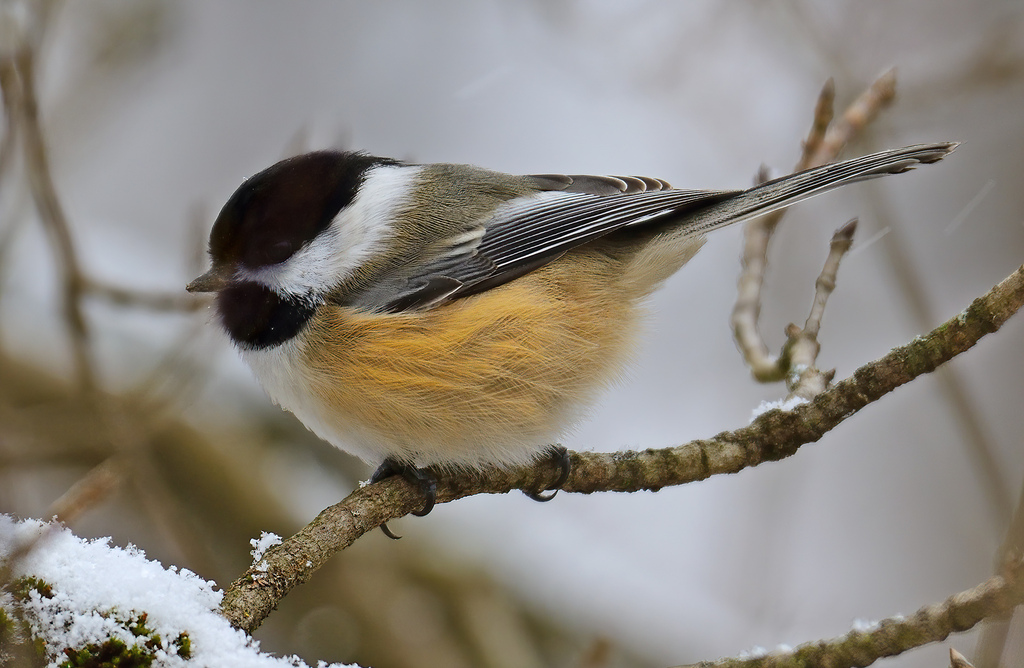
Black-Capped Chickadee
Poecile atricapillus
About This Species
Look for this small, active chickadee working through mixed woodland and garden edges across the northern and western United States and most of Canada, often hanging upside down from twig tips as it gleans insects and seeds. Its clear whistled fee-bee call and scolding chick-a-dee-dee-dee are usually the first clue it is nearby, and it readily joins mixed foraging flocks in winter. Backyard feeders stocked with sunflower seed or suet draw it in reliably year-round, especially in colder months when natural food is scarcer.
Ethical Viewing Guidelines
- It is a confident, curious bird that will often approach a quiet, still observer on its own, so there is rarely a need to close the distance yourself; standing a few metres from a feeder or brushy edge is usually enough.
- Avoid disturbing nest cavities in dead wood or nest boxes during the spring breeding season, since repeated visits can cause adults to abandon a clutch.
- In much of its range, active nests are protected under migratory bird laws, so leave any occupied cavity or box undisturbed until the young have fledged.
LCAvesPasseriformesParidae
Seasonal Activity
17,897,980 sightings · 2000–2026
Citizen science records via GBIF
All monthsThis month
Classification
- Kingdom
- Animalia
- Phylum
- Chordata
- Class
- Aves
- Order
- Passeriformes
- Family
- Paridae
Photo
(c) Ad Konings, some rights reserved (CC BY-NC), uploaded by Ad Konings
CC-BY-NC-4.0
Occurrence data from GBIF.