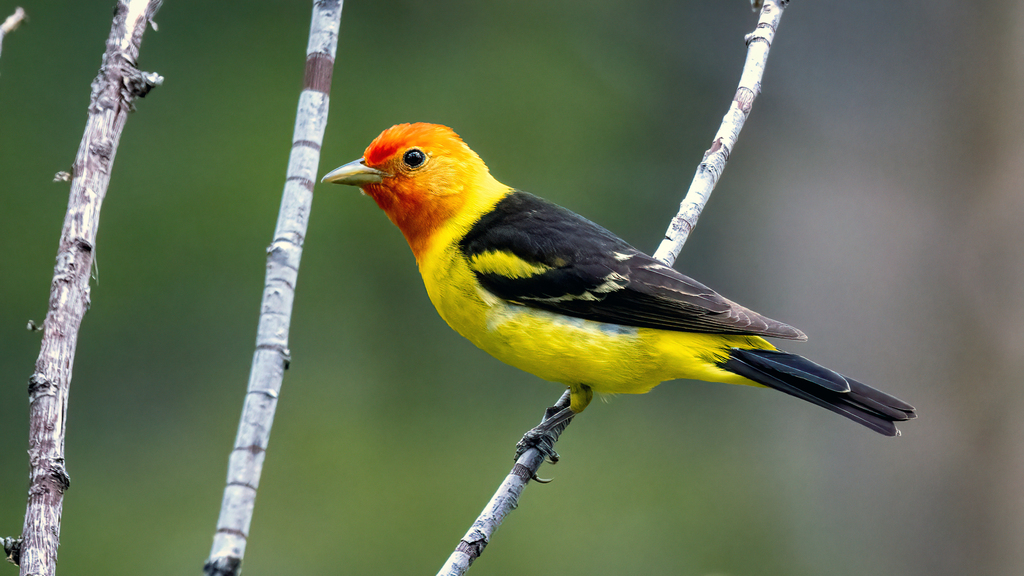
Western Tanager
Piranga ludoviciana
Also known as: Louisiana Tanager, Western Piranga
About This Species
Breeding males are unmistakable with a flame-orange head, yellow body and black wings, best looked for high in the canopy of coniferous and mixed mountain forest in the western United States and Canada during late spring and summer. Females and non-breeding birds are duller olive-yellow and easier to overlook, so listening for the burry, robin-like song is often the quickest way to locate a territory. Migration brings birds through lower-elevation woodland and gardens in spring and autumn, when they can turn up well outside typical breeding habitat.
Ethical Viewing Guidelines
- Watching from 15-20 metres with binoculars is enough to enjoy canopy-feeding behaviour without pushing a bird to relocate, and playback of its song to draw it in should be avoided during the breeding season.
- Migratory birds and their nests are protected under federal law across its US and Canadian range, and nest trees should not be approached or disturbed once breeding has begun.
- Simply staying on trails and letting the bird continue foraging undisturbed is the most reliable approach.
Seasonal Activity
1,358,420 sightings · 2000–2026
Citizen science records via GBIF
Classification
- Kingdom
- Animalia
- Phylum
- Chordata
- Class
- Aves
- Order
- Passeriformes
- Family
- Cardinalidae
Photo
(c) Jim Gain, some rights reserved (CC BY-NC), uploaded by Jim Gain
CC-BY-NC-4.0
Occurrence data from GBIF.