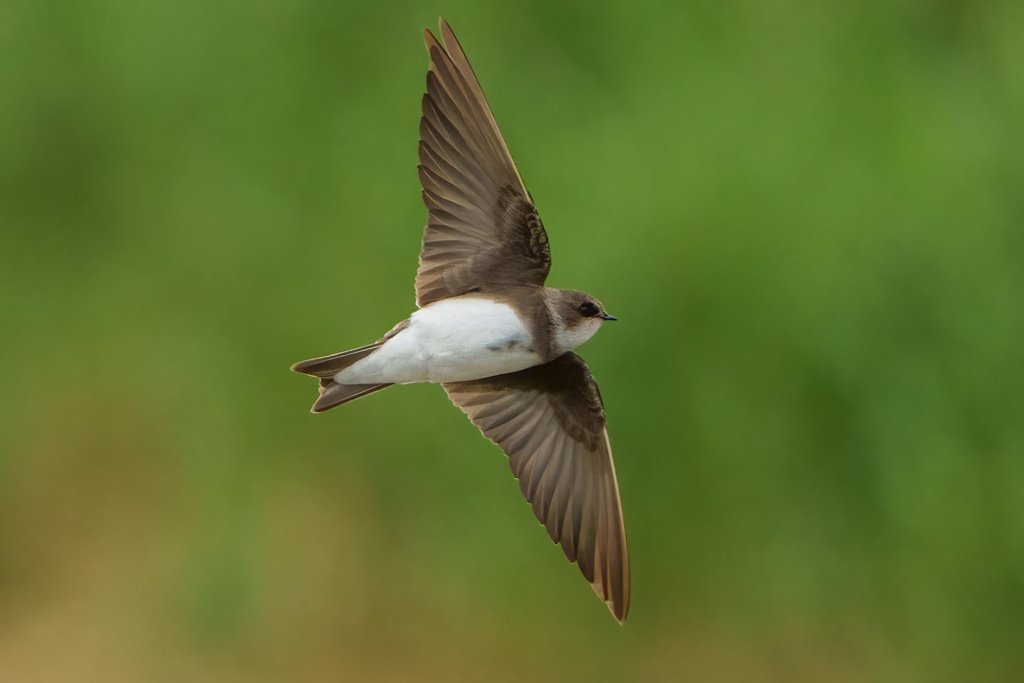
Sand Martin
Riparia riparia
Also known as: Bank Swallow, Collared Sand Martin, Oreneta de Ribera
Habitat
Mid-canopy
Diet
Invertebrate
Active Time
Diurnal
Size
13 g
About This Species
Look for these small, brown-backed swallows nesting in burrows dug into sandy riverbanks, quarry faces or coastal cliffs, often in large colonies that create a lively scene of birds constantly entering and exiting holes. They forage low over water and open ground for flying insects, especially near rivers and lakes. Spring and summer, during the breeding season, bring colonies to their most active and visible state.
Ethical Viewing Guidelines
- View colonies from at least 10 to 15 metres and avoid climbing or standing near burrow entrances, since collapsed or disturbed burrows can destroy nests.
- Wild bird protections across its wide range in Europe, Asia, Africa and the Americas generally cover active nests, though the specific legal framework differs by country, so treat any colony as sensitive regardless of location.
- Avoid disturbing riverbank or quarry nesting sites, which are often already vulnerable to erosion or human activity.
LCAvesPasseriformesHirundinidae
Seasonal Activity
2,094,829 sightings · 2000–2026
Citizen science records via GBIF
All monthsThis month
Classification
- Kingdom
- Animalia
- Phylum
- Chordata
- Class
- Aves
- Order
- Passeriformes
- Family
- Hirundinidae
Traits
- Diet
- Invertebrate
- Foraging
- Mid-canopy
- Activity
- Diurnal
- Body mass
- 13 g
Photo
(c) rupperrt78, some rights reserved (CC BY-NC)
CC-BY-NC-4.0
Occurrence data from GBIF.