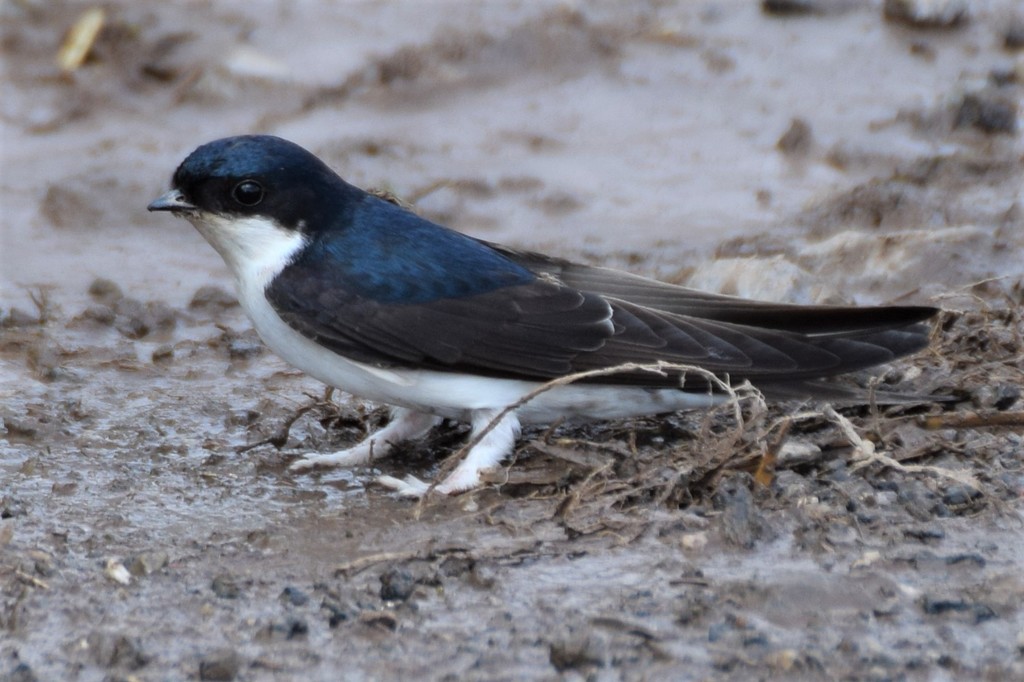
Common House Martin
Delichon urbicum
Also known as: House Martin, Northern House Martin, Western House Martin, Oreneta Cuablanca
Habitat
Mid-canopy
Diet
Invertebrate
Active Time
Diurnal
Size
15 g
About This Species
Look for this small swallow relative skimming low over open ground, water and rooftops as it hawks insects on the wing, with a distinctive white rump visible in flight. It builds mud nests in tight colonies under eaves and bridges, and is most active and visible on warm afternoons during spring and summer when insect activity is high. Villages, farms and bridges at dusk, when insects concentrate, are reliable places to watch feeding flocks.
Ethical Viewing Guidelines
- Avoid disturbing nest colonies under eaves or bridges, and keep noise and activity to a minimum near active nests, since repeated disturbance can cause adults to abandon a colony.
- Nests of this species are legally protected in much of its European and African range while in use, meaning occupied mud nests must not be removed or damaged.
- Watching feeding flocks in open air causes little disturbance, so the main caution is around colony sites themselves rather than birds on the wing.
Seasonal Activity
2,239,005 sightings · 2000–2026
Citizen science records via GBIF
Classification
- Kingdom
- Animalia
- Phylum
- Chordata
- Class
- Aves
- Order
- Passeriformes
- Family
- Hirundinidae
Traits
- Diet
- Invertebrate
- Foraging
- Mid-canopy
- Activity
- Diurnal
- Body mass
- 15 g
Photo
(c) Beate & Heinz Beyerlein, some rights reserved (CC BY-NC), uploaded by Beate & Heinz Beyerlein
CC-BY-NC-4.0
Occurrence data from GBIF.