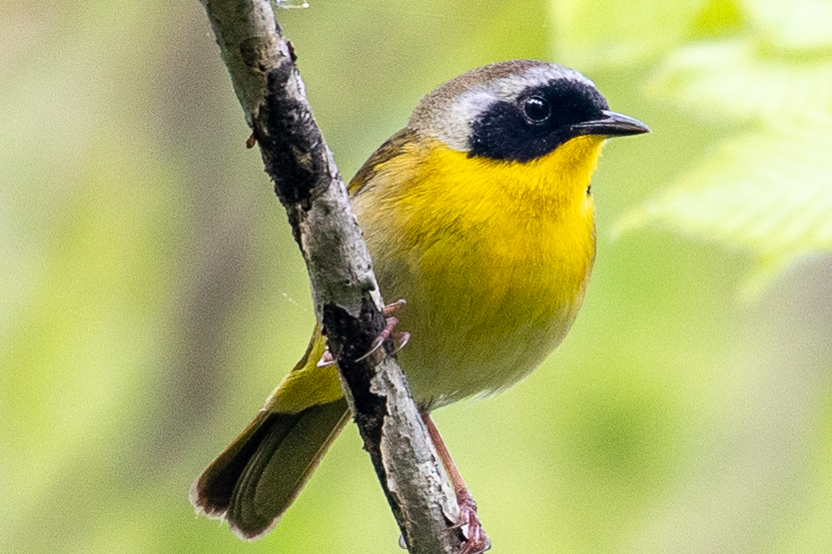
Common Yellowthroat
Geothlypis trichas
Also known as: Yellowthroat, Commonyellowthroat
Habitat
Understory
Diet
Invertebrate
Active Time
Diurnal
Size
10 g
About This Species
Look for a small warbler skulking low in dense marsh vegetation, wet thickets and brushy field edges rather than open canopy. The male's bright yellow throat and black facial mask are distinctive, and its loud, rolling witchety-witchety-witchety song often gives away its presence before it's seen. Breeding males sing persistently through spring and early summer, making late spring the easiest time to locate one by ear.
Ethical Viewing Guidelines
- Stay on trails and keep well back from dense cover where this species nests low to the ground or over water; playback and pishing to draw it out should be used sparingly, especially during the breeding season.
- Migratory birds are protected across most of their range in North America, so nests, eggs and young must not be disturbed or handled.
- A pair of binoculars and patience at a respectful distance will produce better views than approaching cover directly.
LCAvesPasseriformesParulidae
Seasonal Activity
8,163,687 sightings · 2000–2026
Citizen science records via GBIF
All monthsThis month
Classification
- Kingdom
- Animalia
- Phylum
- Chordata
- Class
- Aves
- Order
- Passeriformes
- Family
- Parulidae
Traits
- Diet
- Invertebrate
- Foraging
- Understory
- Activity
- Diurnal
- Body mass
- 10 g
Photo
(c) bwood708, some rights reserved (CC BY-NC), uploaded by bwood708
CC-BY-NC-4.0
Occurrence data from GBIF.