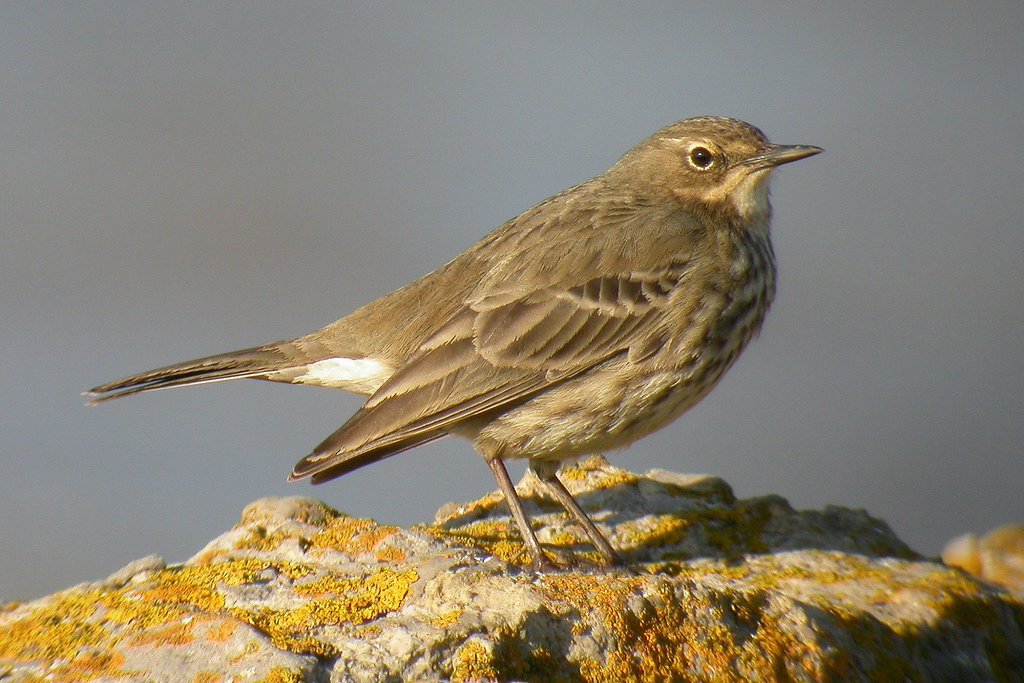
Eurasian Rock Pipit
Anthus petrosus
Also known as: Rock Pipit, European Rock Pipit
Habitat
Ground
Diet
Invertebrate
Active Time
Diurnal
Size
22 g
About This Species
A dark, streaky pipit of rocky and sandy coastlines in northwest Europe, this species forages on the ground along the tideline and among seaweed-covered rocks, bobbing its tail and running in short bursts as it picks up invertebrates. It is present year-round on many coasts and is most conspicuous during the breeding season in spring and early summer, when males give a simple, repetitive song from low rocks or during a short display flight. Look for it on exposed shorelines, sea walls, and rocky headlands, especially at low tide when foraging areas are exposed.
Ethical Viewing Guidelines
- It typically tolerates observation from a reasonable distance along public shoreline paths, and a slow, unobtrusive approach with binoculars is usually enough to get good views without flushing the bird.
- Nests are built low among rocks or vegetation on the shore and are easily overlooked, so care should be taken when walking off marked paths during the breeding season.
- Wild bird protection law varies by country across its European range, so check local rules before approaching nesting areas closely.
Seasonal Activity
479,589 sightings · 2000–2026
Citizen science records via GBIF
Classification
- Kingdom
- Animalia
- Phylum
- Chordata
- Class
- Aves
- Order
- Passeriformes
- Family
- Motacillidae
Traits
- Diet
- Invertebrate
- Foraging
- Ground
- Activity
- Diurnal
- Body mass
- 22 g
Photo
(c) Paul Roberts, some rights reserved (CC BY-NC)
CC-BY-NC-4.0
Occurrence data from GBIF.