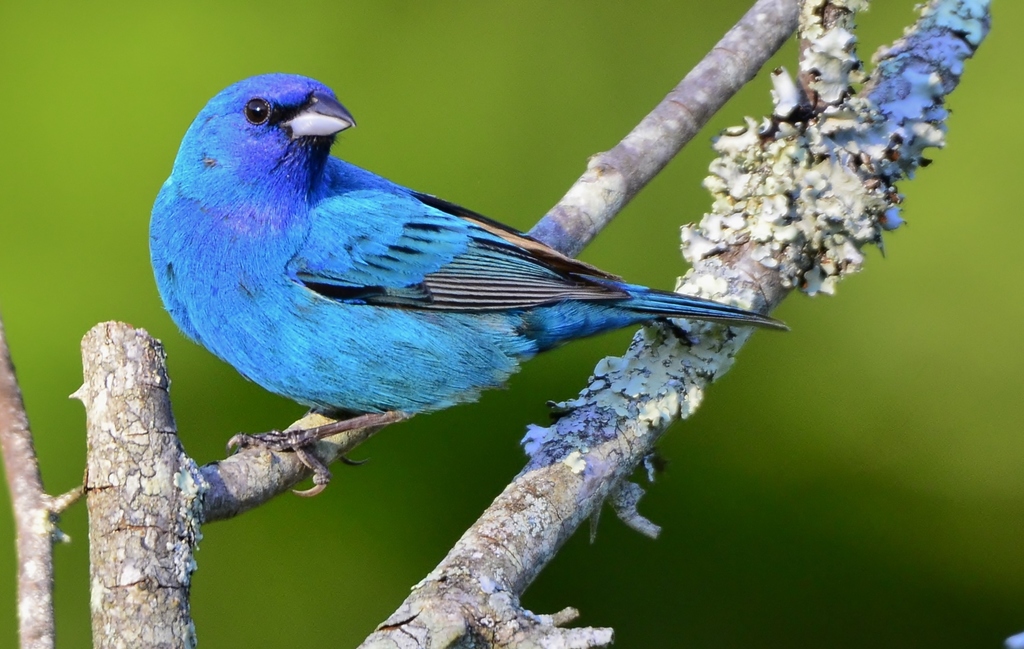
Indigo Bunting
Passerina cyanea
Habitat
Ground
Diet
PlantSeed
Active Time
Diurnal
Size
15 g
About This Species
Check brushy field edges, overgrown pastures, and woodland clearings across eastern and central North America, where males sing persistently from an exposed perch such as a wire or treetop through the summer. In good light the male's plumage is a striking, almost electric blue, though it can look black in poor light or silhouette, while females are a plain warm brown. Late spring and summer during the breeding season are best, when males sing through the heat of the day and are easiest to locate by voice.
Ethical Viewing Guidelines
- A distance of roughly 10-15 metres with binoculars is generally enough to enjoy prolonged views of a singing male without causing it to stop or relocate.
- As a migratory songbird breeding in the US and Canada, it and its nest are protected under federal migratory bird law, so avoid handling nests, eggs, or young and keep dogs and foot traffic away from known nesting cover during the breeding season.
- This species migrates at night, so nocturnal light pollution near stopover habitat can also disrupt its migration and is worth minimizing where possible.
LCAvesPasseriformesCardinalidae
Seasonal Activity
3,829,953 sightings · 2000–2026
Citizen science records via GBIF
All monthsThis month
Classification
- Kingdom
- Animalia
- Phylum
- Chordata
- Class
- Aves
- Order
- Passeriformes
- Family
- Cardinalidae
Traits
- Diet
- PlantSeed
- Foraging
- Ground
- Activity
- Diurnal
- Body mass
- 15 g
Photo
(c) Gareth Rasberry, some rights reserved (CC BY-SA)
CC-BY-SA-4.0
Occurrence data from GBIF.