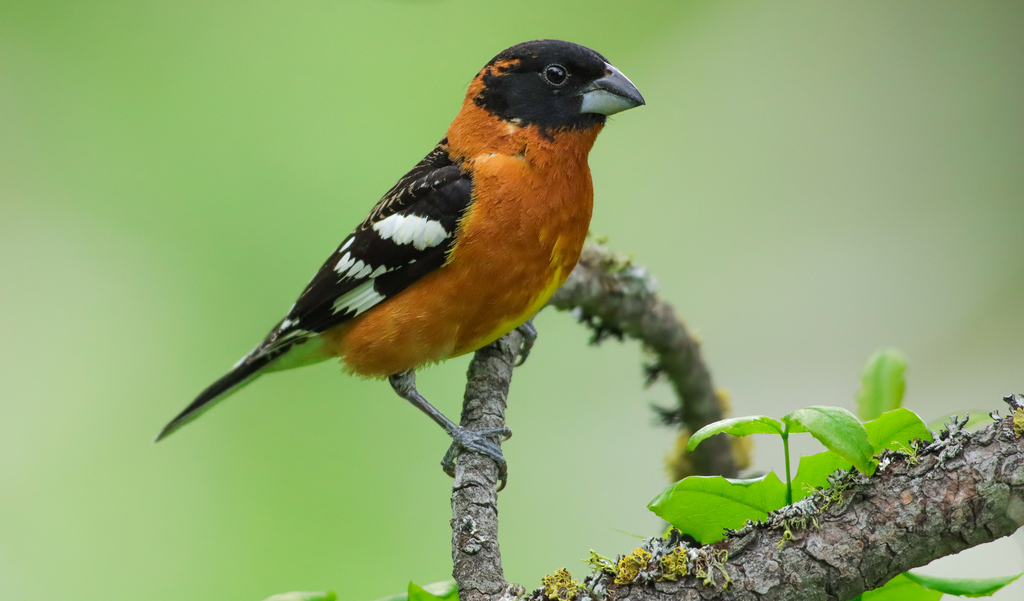
Black-Headed Grosbeak
Pheucticus melanocephalus
Habitat
Canopy
Diet
Invertebrate
Active Time
Diurnal
Size
47 g
About This Species
A striking orange-and-black finch-like bird found in open woodland, orchards and shrubby edges, foraging in the tree canopy and shrub layer for insects, seeds and fruit. It is most active in the early morning and again toward dusk, and its rich, robin-like song is a good clue to its presence in leafy cover during the breeding season in spring and early summer. Fruiting trees and shrubs in migration season can also draw good numbers as birds pass through.
Ethical Viewing Guidelines
- Observe from a distance with binoculars rather than approaching a singing or nesting bird closely, since canopy nests are easily disturbed by people lingering directly beneath them.
- Songbirds and their nests are protected under wildlife law across most of the range, so avoid handling nests or young and keep pets away from nesting areas.
- If found low in a garden or hedge, allow the bird to continue foraging undisturbed rather than moving in for a closer look.
LCAvesPasseriformesCardinalidae
Seasonal Activity
1,459,745 sightings · 2000–2026
Citizen science records via GBIF
All monthsThis month
Classification
- Kingdom
- Animalia
- Phylum
- Chordata
- Class
- Aves
- Order
- Passeriformes
- Family
- Cardinalidae
Traits
- Diet
- Invertebrate
- Foraging
- Canopy
- Activity
- Diurnal
- Body mass
- 47 g
Photo
(c) Andrew Thomas, some rights reserved (CC BY-NC), uploaded by Andrew Thomas
CC-BY-NC-4.0
Occurrence data from GBIF.