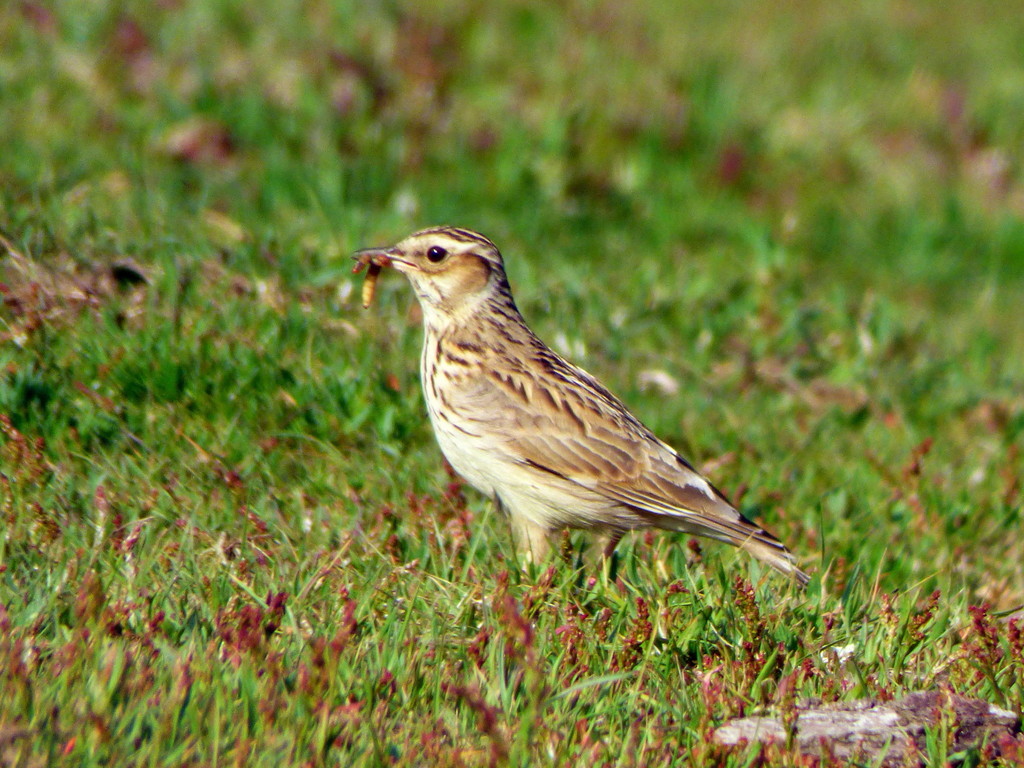
Woodlark
Lullula arborea
Also known as: Wood Lark
Habitat
Ground
Diet
Omnivore
Active Time
Diurnal
Size
27 g
About This Species
Search heathland, open dunes and recently disturbed or lightly grazed ground with scattered scrub, where it walks and runs on the ground rather than hopping, probing for insects. Its rich, fluting song is often given in a slow, circling display flight well above the ground, making early morning in spring the best time to detect it by ear before you see it. Bare, sandy patches between grass tussocks are favored feeding spots outside the breeding season.
Ethical Viewing Guidelines
- Keep to paths and avoid walking through heathland vegetation during the breeding season, since this ground-nesting species is easily flushed and its nest is well camouflaged and easily trodden on.
- It receives legal protection against disturbance at the nest under wildlife law in parts of its European range, particularly where it breeds on protected heathland reserves.
- Viewing with binoculars from a track, rather than venturing off-path to get closer, avoids the risk of stepping on eggs or chicks.
LCAvesPasseriformesAlaudidae
Seasonal Activity
792,767 sightings · 2000–2026
Citizen science records via GBIF
All monthsThis month
Classification
- Kingdom
- Animalia
- Phylum
- Chordata
- Class
- Aves
- Order
- Passeriformes
- Family
- Alaudidae
Traits
- Diet
- Omnivore
- Foraging
- Ground
- Activity
- Diurnal
- Body mass
- 27 g
Photo
(c) Philip Mark Osso, some rights reserved (CC BY-NC), uploaded by Philip Mark Osso
CC-BY-NC-4.0
Occurrence data from GBIF.