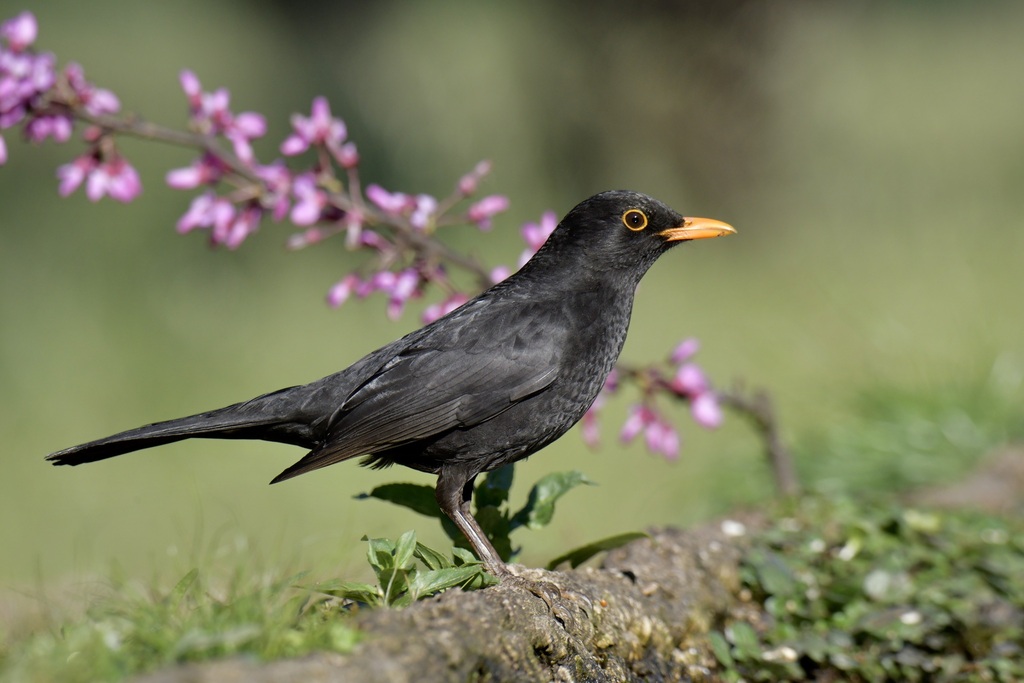
Common Blackbird
Turdus merula
Also known as: Eurasian Blackbird, Blackbird, Merla
Habitat
Ground
Diet
Omnivore
Active Time
Diurnal
Size
103 g
About This Species
A familiar garden and woodland-edge thrush across Europe, usually seen foraging on lawns and turning over leaf litter for worms and insects, often with a distinctive tail-flick when alert. Males deliver a rich, fluting song from rooftops or high perches, especially at dawn and dusk in spring, making early morning the best time to hear it in full voice. It is active through most of the day but especially conspicuous around twilight, when it often gives a sharp alarm call before going to roost.
Ethical Viewing Guidelines
- A few metres' distance is generally enough to watch it feeding without causing it to flee, though it becomes markedly more wary near an active nest.
- In the UK it is protected under the Wildlife and Countryside Act, and similar general bird protection laws apply across most of its European range, making it an offence to intentionally disturb nests, eggs, or young.
- Keep well back from any nest in a hedge or shrub and avoid repeated visits to the same spot.
Seasonal Activity
12,142,675 sightings · 2000–2026
Citizen science records via GBIF
Classification
- Kingdom
- Animalia
- Phylum
- Chordata
- Class
- Aves
- Order
- Passeriformes
- Family
- Turdidae
Traits
- Diet
- Omnivore
- Foraging
- Ground
- Activity
- Diurnal
- Body mass
- 103 g
Photo
(c) Luiz Lapa, some rights reserved (CC BY)
CC-BY-4.0
Occurrence data from GBIF.