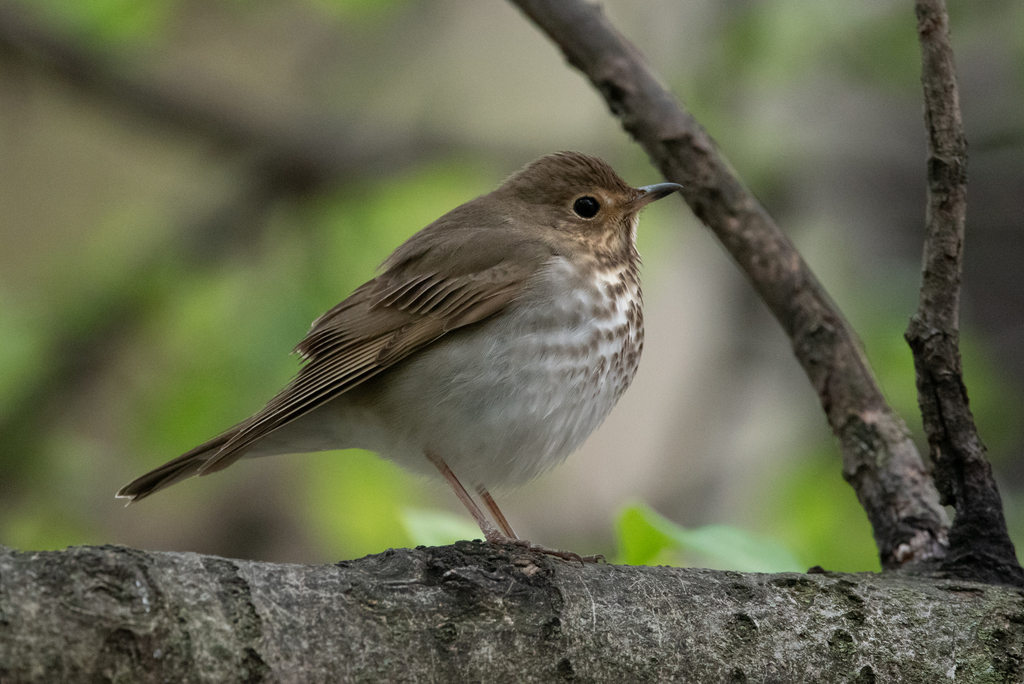
Swainson's Thrush
Catharus ustulatus
Also known as: Olive-Backed Thrush, Russet-Backed Thrush
Habitat
Ground
Diet
Invertebrate
Active Time
Diurnal
Size
30 g
About This Species
Look and listen in damp, shaded woodland with a thick understorey, where this thrush forages quietly on the ground for insects and berries. Its ascending, flute-like song carries at dawn and dusk during spring migration and the summer breeding season, though the bird itself often stays hidden in foliage. Patience at woodland edges near water, especially early morning, gives the best chance of a clear view.
Ethical Viewing Guidelines
- Stay back at least 10 metres and let the bird continue foraging undisturbed rather than approaching or using playback to draw it out, particularly near a nest.
- Migratory songbirds like this one are protected under law across most of their range, including the US Migratory Bird Treaty Act and equivalent protections in Canada and Latin America, so nests and eggs must not be handled or disturbed.
- Use binoculars rather than closing the distance, and retreat if the bird stops feeding or gives alarm calls.
LCAvesPasseriformesTurdidae
Seasonal Activity
2,324,011 sightings · 2000–2026
Citizen science records via GBIF
All monthsThis month
Classification
- Kingdom
- Animalia
- Phylum
- Chordata
- Class
- Aves
- Order
- Passeriformes
- Family
- Turdidae
Traits
- Diet
- Invertebrate
- Foraging
- Ground
- Activity
- Diurnal
- Body mass
- 30 g
Photo
(c) Jing-Yi Lu, some rights reserved (CC BY-NC), uploaded by Jing-Yi Lu
CC-BY-NC-4.0
Occurrence data from GBIF.