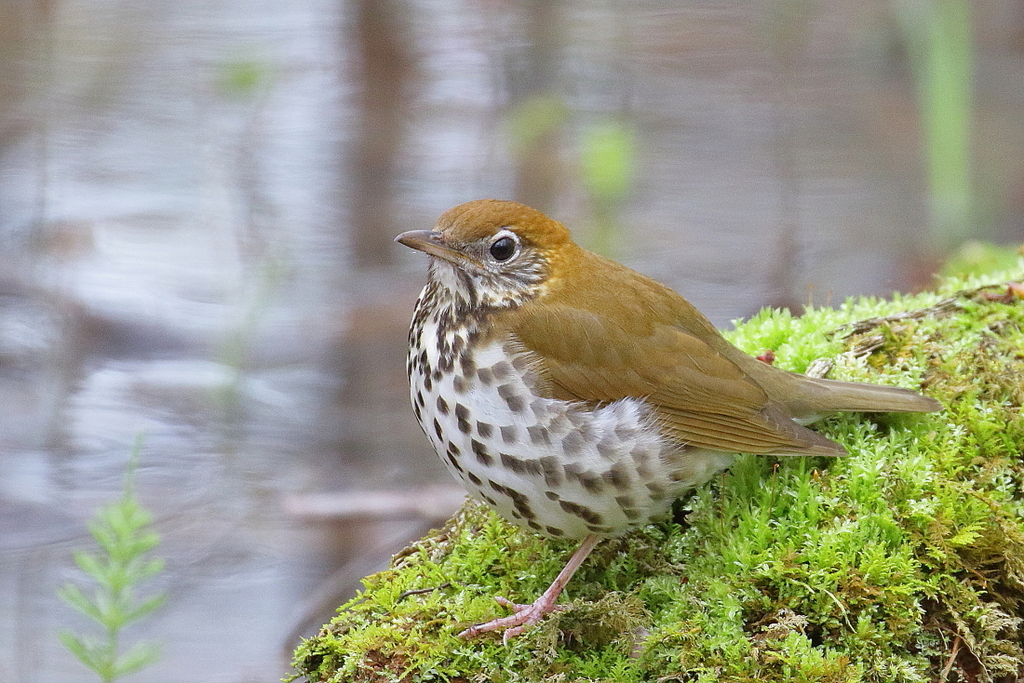
Wood Thrush
Hylocichla mustelina
Habitat
Ground
Diet
Invertebrate
Active Time
Diurnal
Size
50 g
About This Species
Found in mature deciduous and mixed forests with a closed canopy, deep leaf litter, and moist understory, it spends most of its time flipping leaves and probing the soil for earthworms, beetles, and other invertebrates along shaded forest floors. The rich, flute-like song — a series of spiraling, ethereal phrases often rendered as *ee-oh-lay* — is far more reliably detected than the bird itself, and singing peaks at dawn and dusk when the forest floor is dim and quiet. Visit intact, interior forest tracts from May through July during the first and last thirty minutes of daylight for the best chance of both hearing sustained song and spotting the spotted, russet-backed adult foraging among fallen leaves near the base of mature hardwoods.
Ethical Viewing Guidelines
- Maintain a viewing distance of at least 30 metres and observe from established trails where possible, using binoculars or a spotting scope to avoid approaching active nests.
- In the United States, this species is protected under the Migratory Bird Treaty Act, which prohibits disturbance, capture, or harm, while similar protections apply under Canada's Migratory Birds Convention Act and relevant legislation in Central American wintering grounds.
- Minimise time spent near nest sites, avoid playback calls during the breeding season (May–August) as these can disrupt territorial behaviour and nesting success, and keep noise and movement to a minimum to reduce stress to the birds.
Seasonal Activity
2,149,253 sightings · 2000–2026
Citizen science records via GBIF
Classification
- Kingdom
- Animalia
- Phylum
- Chordata
- Class
- Aves
- Order
- Passeriformes
- Family
- Turdidae
Traits
- Diet
- Invertebrate
- Foraging
- Ground
- Activity
- Diurnal
- Body mass
- 50 g
Photo
(c) allenwoodliffe, some rights reserved (CC BY-NC), uploaded by allenwoodliffe
CC-BY-NC-4.0
Occurrence data from GBIF.