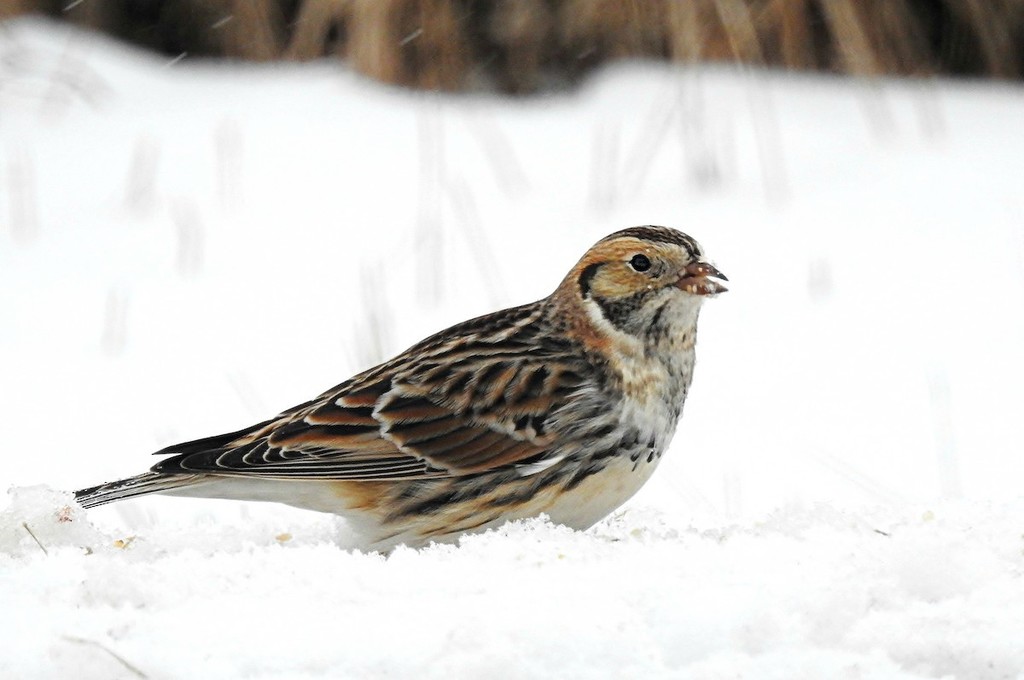
Lapland Longspur
Calcarius lapponicus
Also known as: Lapland Bunting
Habitat
Ground
Diet
Omnivore
Active Time
Diurnal
Size
28 g
About This Species
This Arctic-breeding songbird forages on open tundra, stubble fields, and coastal grassland, walking and running along the ground rather than hopping, often in loose flocks outside the breeding season. Breeding males show a bold black face and chestnut nape, best seen on the summer tundra breeding grounds, while non-breeding birds are streaky brown and easiest to find scattered through winter fields and shorelines. Late spring on the breeding grounds or winter in open agricultural country are the most productive times to search.
Ethical Viewing Guidelines
- Keep a wide berth, at least 50 metres, from ground-nesting pairs on tundra, since nests are extremely well camouflaged and easily trampled without the observer noticing.
- Migratory bird protections apply across most of this species' range, though the specific statutes and enforcement differ between countries, so rely on the general principle of avoiding nesting areas during the short Arctic breeding season rather than a single rule.
- In winter flocks, moving slowly and avoiding sudden approaches keeps birds foraging rather than flushing repeatedly, which wastes energy they need in cold conditions.
Seasonal Activity
379,345 sightings · 2000–2026
Citizen science records via GBIF
Classification
- Kingdom
- Animalia
- Phylum
- Chordata
- Class
- Aves
- Order
- Passeriformes
- Family
- Calcariidae
Traits
- Diet
- Omnivore
- Foraging
- Ground
- Activity
- Diurnal
- Body mass
- 28 g
Photo
(c) Joanne Muis Redwood, some rights reserved (CC BY-NC), uploaded by Joanne Muis Redwood
CC-BY-NC-4.0
Occurrence data from GBIF.