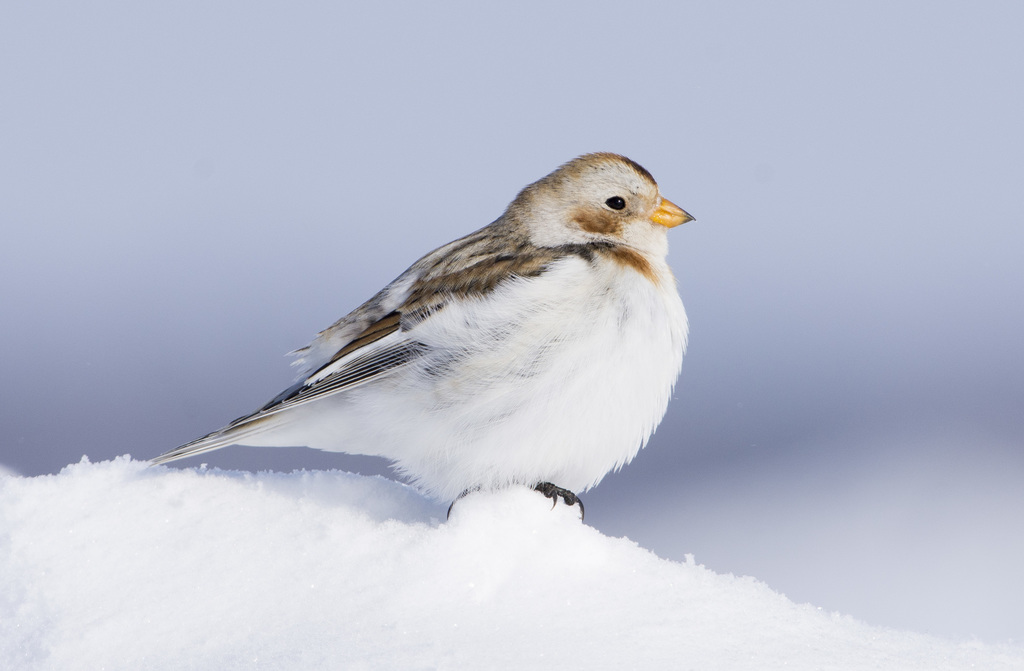
Snow Bunting
Plectrophenax nivalis
Habitat
Ground
Diet
PlantSeed
Active Time
Diurnal
Size
42 g
About This Species
Feeds on the ground in flocks across open, wind-scoured habitat, breeding among Arctic and subarctic rock and tundra and wintering on coastal dunes, stubble fields, and shorelines further south. Look for tight, fast-flying flocks that flush and wheel together, showing flashes of white in the wings, and listen for a soft, rippling call given in flight. Winter, when birds gather in visible flocks on beaches and farmland well south of the breeding range, offers the most accessible viewing.
Ethical Viewing Guidelines
- A distance of 15-20 metres is generally enough to watch feeding flocks without flushing them repeatedly, which wastes energy needed to survive cold conditions.
- It is protected under migratory bird law in the countries across its circumpolar breeding and wintering range, including the US, Canada, and much of Europe, though specific protections vary by country.
- Avoid approaching directly or letting dogs run at flocks on beaches and fields, since repeated flushing in winter can be energetically costly.
LCAvesPasseriformesCalcariidae
Seasonal Activity
806,333 sightings · 2000–2026
Citizen science records via GBIF
All monthsThis month
Classification
- Kingdom
- Animalia
- Phylum
- Chordata
- Class
- Aves
- Order
- Passeriformes
- Family
- Calcariidae
Traits
- Diet
- PlantSeed
- Foraging
- Ground
- Activity
- Diurnal
- Body mass
- 42 g
Photo
(c) Pavel Shukov, some rights reserved (CC BY-NC), uploaded by Pavel Shukov
CC-BY-NC-4.0
Occurrence data from GBIF.