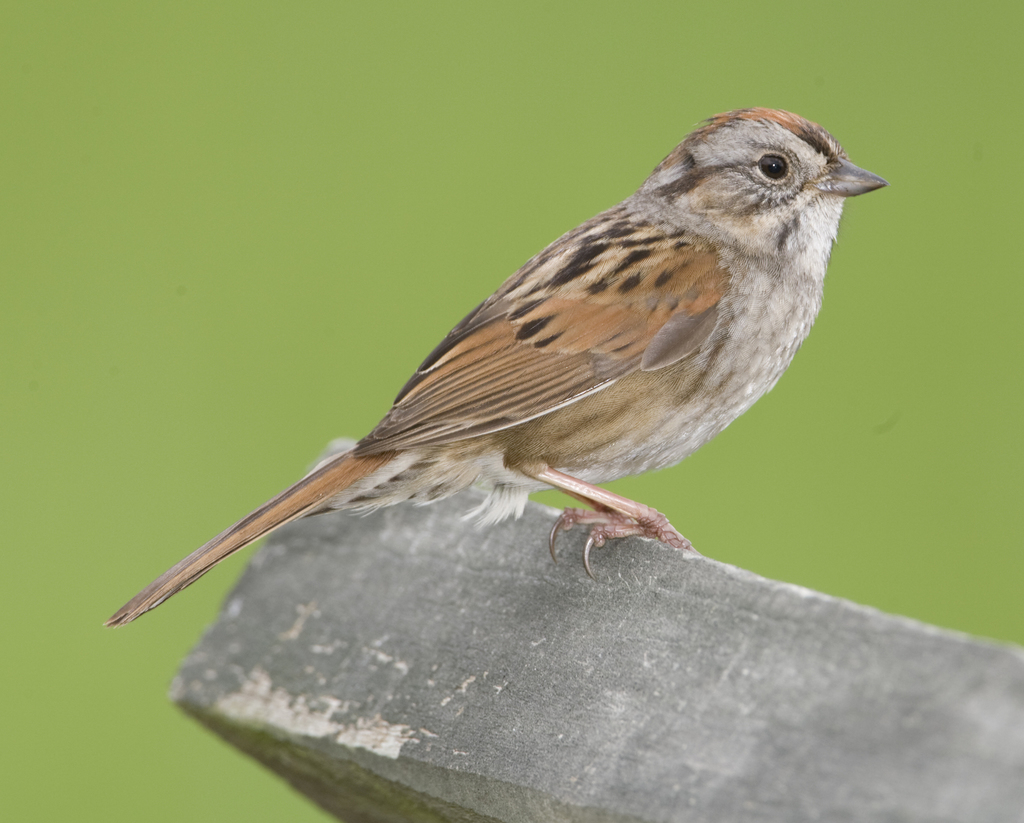
Swamp Sparrow
Melospiza georgiana
Also known as: Marsh Sparrow
About This Species
This species favors dense marsh vegetation, wet meadows and cattail edges across its North American range, skulking low rather than perching in the open. It is most reliably detected by a slow, musical trill, distinct from the faster song of related sparrows, especially during the breeding season. Early morning visits to marsh boardwalks or pond edges, with patience for quiet waiting, usually offer the best views.
Ethical Viewing Guidelines
- Keep well back from dense marsh vegetation where it feeds and nests, since pushing into reedbeds to flush a bird causes needless disturbance and can damage sensitive wetland habitat.
- Wild birds and their nests are broadly protected under migratory bird law in the US and Canada, so nests should never be approached or handled.
- Using a spotting scope or zoom lens from a trail or boardwalk is a better approach than moving off-path toward calling birds.
LCAvesPasseriformesPasserellidae
Seasonal Activity
3,178,042 sightings · 2000–2026
Citizen science records via GBIF
All monthsThis month
Classification
- Kingdom
- Animalia
- Phylum
- Chordata
- Class
- Aves
- Order
- Passeriformes
- Family
- Passerellidae
Photo
(c) Laura Gooch, some rights reserved (CC BY-NC-SA)
CC-BY-NC-SA-4.0
Occurrence data from GBIF.