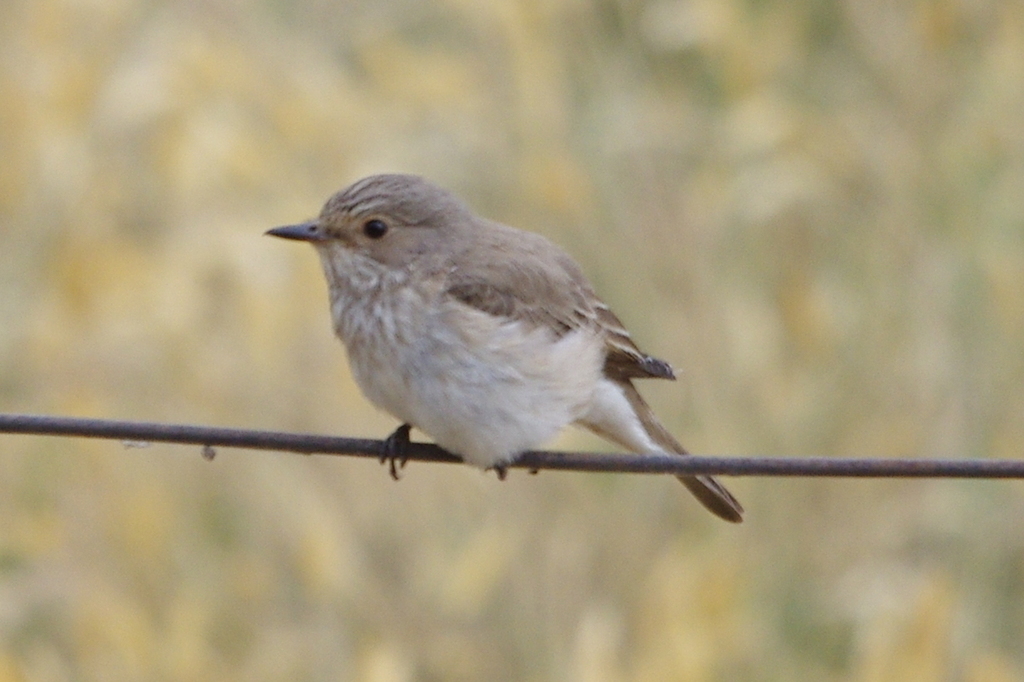
Spotted Flycatcher
Muscicapa striata
Habitat
Ground
Diet
Invertebrate
Active Time
Diurnal
Size
16 g
About This Species
This slim, understated songbird favours open woodland edges, orchards, and gardens with scattered perches across Europe, western Asia, and Africa in winter, where it sallies out from an exposed twig to snatch flying insects and returns to the same spot. Its upright posture and habit of returning repeatedly to a favoured perch make it one of the easier flycatchers to watch closely once located. It arrives late in spring compared to most migrants, so early summer is the best time to find breeding birds on their territories.
Ethical Viewing Guidelines
- A distance of 10-15 metres is generally sufficient, since this species often tolerates quiet observers well if movements are slow and perches are not blocked.
- Bird protection law applies across its European and African range but specific rules differ by country, so treat any nest site, typically a well-hidden cup against a wall or tree trunk, with particular care and check local guidance.
- Avoid repeated visits to a known nest, as flycatchers can desert if disturbance becomes frequent.
Seasonal Activity
1,053,808 sightings · 2000–2026
Citizen science records via GBIF
Classification
- Kingdom
- Animalia
- Phylum
- Chordata
- Class
- Aves
- Order
- Passeriformes
- Family
- Muscicapidae
Traits
- Diet
- Invertebrate
- Foraging
- Ground
- Activity
- Diurnal
- Body mass
- 16 g
Photo
(c) Volker Heinrich, some rights reserved (CC BY-NC), uploaded by Volker Heinrich
CC-BY-NC-4.0
Occurrence data from GBIF.