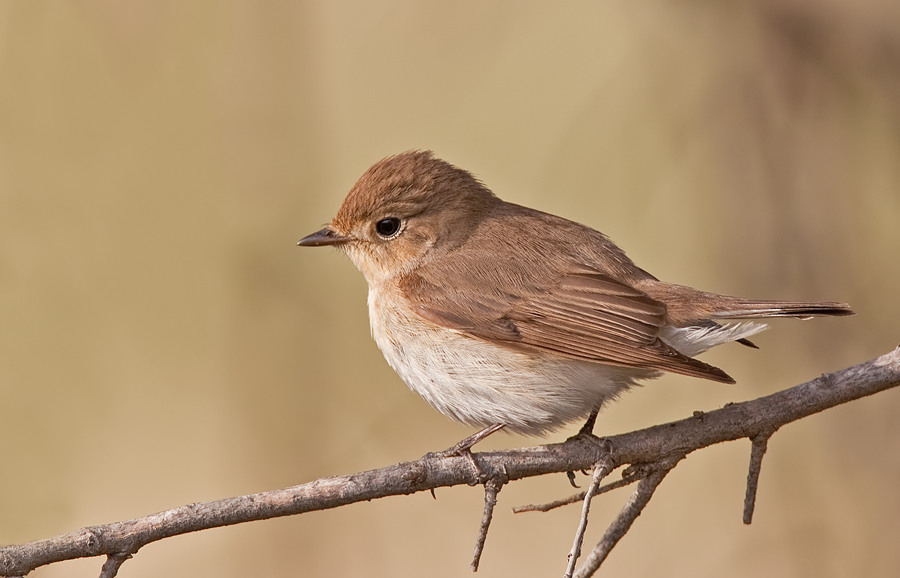
Red-Breasted Flycatcher
Ficedula parva
Habitat
Mid-canopy
Diet
Invertebrate
Active Time
Diurnal
Size
11 g
About This Species
Breeds in mixed and coniferous forest across parts of Europe and Asia, typically foraging in the mid-canopy where it sallies out from a perch to catch insects in flight. Males show a small reddish throat patch and a habit of cocking and fanning the tail that helps distinguish them from similar flycatchers. It is most conspicuous during spring migration and the breeding season, when its thin, descending song is given from mid-height perches in open woodland.
Ethical Viewing Guidelines
- As with other small migratory flycatchers, keeping well back from an active nest site reduces the risk of the adults abandoning it, and a stationary watch from a distance is far less disruptive than following the bird between perches.
- Nesting birds are protected under wildlife law across most of its European and Asian breeding range, though the details differ by country, so treat any nest as off-limits to close approach.
- Binoculars are the right tool for a good view of the throat colouring without needing to move closer.
LCAvesPasseriformesMuscicapidae
Seasonal Activity
188,643 sightings · 2000–2026
Citizen science records via GBIF
All monthsThis month
Classification
- Kingdom
- Animalia
- Phylum
- Chordata
- Class
- Aves
- Order
- Passeriformes
- Family
- Muscicapidae
Traits
- Diet
- Invertebrate
- Foraging
- Mid-canopy
- Activity
- Diurnal
- Body mass
- 11 g
Photo
(c) Paul Cools, some rights reserved (CC BY-NC), uploaded by Paul Cools
CC-BY-NC-4.0
Occurrence data from GBIF.