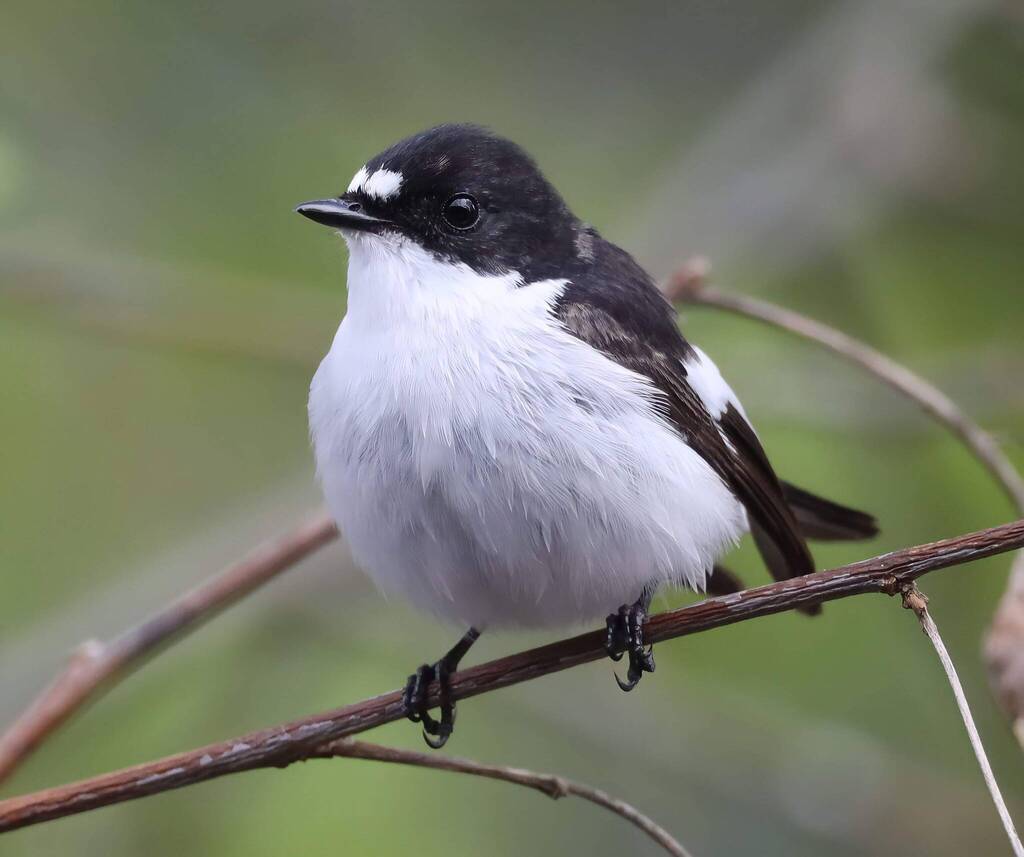
European Pied Flycatcher
Ficedula hypoleuca
Also known as: Pied Flycatcher
Habitat
Understory
Diet
Invertebrate
Active Time
Diurnal
Size
14 g
About This Species
A migratory flycatcher of oak and mixed woodland, it favours the shaded understory and mid-canopy, where it sallies out from a perch to snatch flying insects and returns to the same spot. Males in breeding plumage show a striking black-and-white pattern and sing a short, clear, warbling phrase from an exposed perch, making April and May, around spring arrival, the best time to find one by ear before the canopy fills in. It nests in tree cavities and readily takes to nest boxes in suitable woodland.
Ethical Viewing Guidelines
- Keep to paths and avoid lingering near active nest holes or boxes, particularly while adults are feeding young, since this is a small migrant with a short breeding window and little energy to spare.
- Wild birds, nests, and eggs are protected across its European breeding and passage range under national laws implementing the EU Birds Directive, and similarly protected in the UK under the Wildlife and Countryside Act 1981.
- Quiet observation from a distance with binoculars is the best way to watch it without affecting nesting success.
Seasonal Activity
1,644,280 sightings · 2000–2026
Citizen science records via GBIF
Classification
- Kingdom
- Animalia
- Phylum
- Chordata
- Class
- Aves
- Order
- Passeriformes
- Family
- Muscicapidae
Traits
- Diet
- Invertebrate
- Foraging
- Understory
- Activity
- Diurnal
- Body mass
- 14 g
Photo
(c) ViiruPesonen, some rights reserved (CC BY-SA)
CC-BY-SA-4.0
Occurrence data from GBIF.