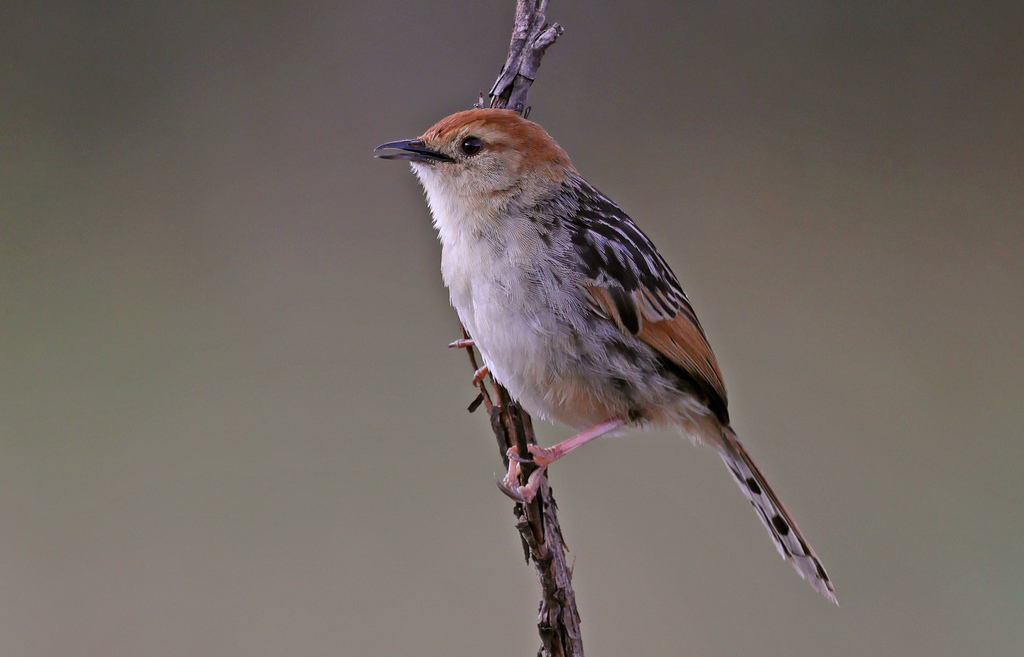
Levaillant's Cisticola
Cisticola tinniens
Also known as: Lesser Black-Backed Cisticola, Tinkling Cisticola
Habitat
Ground
Diet
Invertebrate
Active Time
Diurnal
Size
11 g
About This Species
This warbler-like cisticola inhabits reedbeds, rank grass and marsh vegetation across southern and eastern Africa, where it clings to reed stems and delivers a distinctive, repeated call from low in the vegetation. It is a skulker, more often detected by voice than seen well, though it will sometimes perch briefly atop a reed to sing. Wetland fringes in the breeding season, when males are most vocal, offer the best chance of a clear view.
Ethical Viewing Guidelines
- Stay on paths or boardwalks around reedbeds rather than wading in, since the low, dense nests built in marsh vegetation are easily trampled or exposed to predators by disturbance.
- A slow, quiet approach along the reed margin, then waiting rather than pushing forward, gives the best chance of a view without flushing the bird.
- Wetland habitats it depends on are protected in many range countries, so check local rules before entering marsh reserves.
LCAvesPasseriformesCisticolidae
Seasonal Activity
156,540 sightings · 2000–2026
Citizen science records via GBIF
All monthsThis month
Classification
- Kingdom
- Animalia
- Phylum
- Chordata
- Class
- Aves
- Order
- Passeriformes
- Family
- Cisticolidae
Traits
- Diet
- Invertebrate
- Foraging
- Ground
- Activity
- Diurnal
- Body mass
- 11 g
Photo
(c) Ad Konings, some rights reserved (CC BY-NC), uploaded by Ad Konings
CC-BY-NC-4.0
Occurrence data from GBIF.